
15 Interlocking Driveway & Patio Ideas for Fergus & Guelph Homes
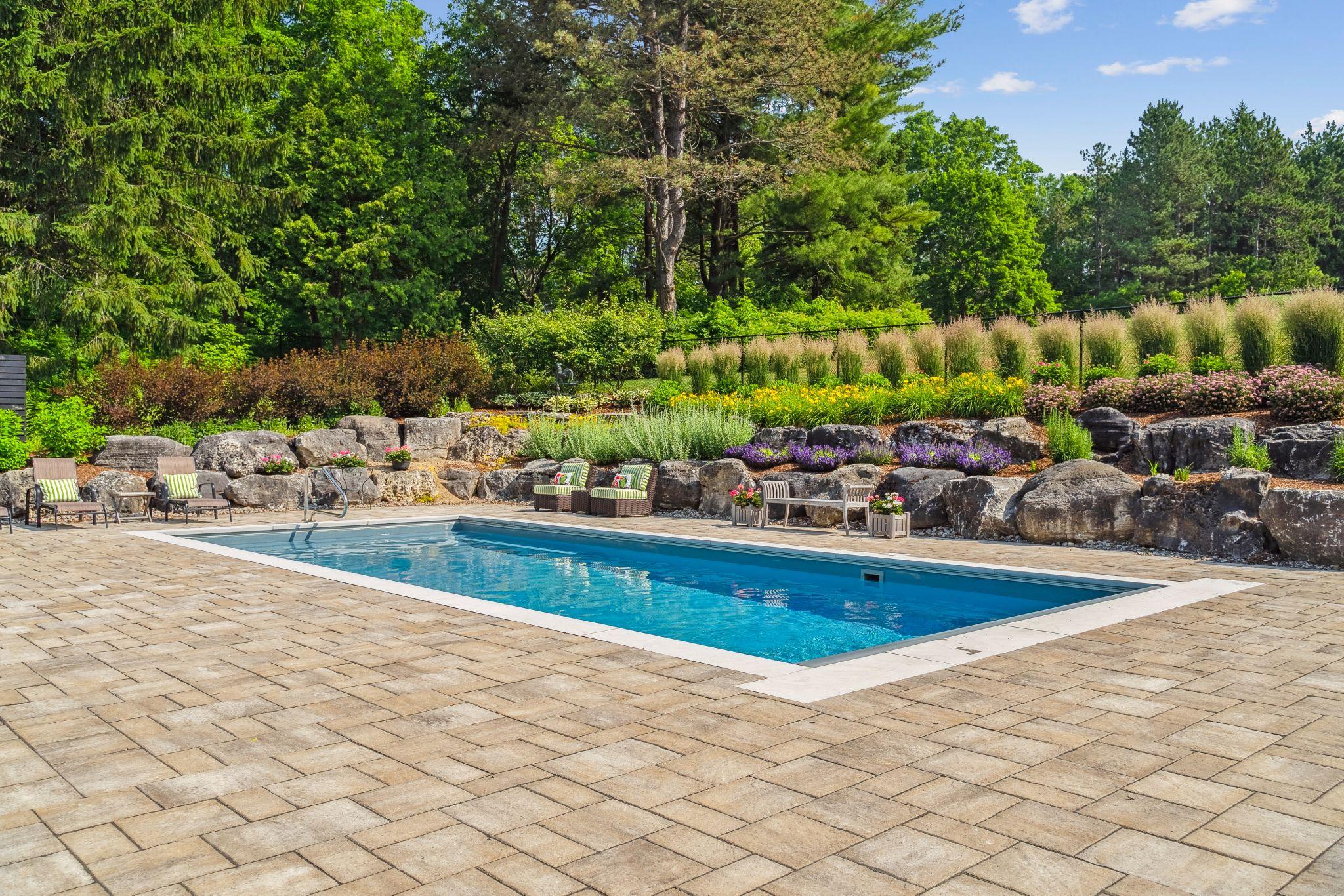
If you’re planning a hardscape project in Wellington County, matching your design to your specific lot conditions is critical. A sloped Grand River Valley driveway requires completely different engineering than a patio behind a Fergus century home or a tight subdivision lot in Guelph. The challenge is that generic design trends ignore our regional soil and grade constraints, which can easily lead to shifting stones or poor drainage down the road.
This guide helps by breaking down 15 practical interlocking driveway ideas and tailored interlocking patio layouts based on real local property conditions. Our goal is to give you realistic interlock design options you need to confidently map out your space.
If you haven’t yet, our hardscaping guide for Fergus and Guelph covers the material and cost basics behind all fifteen; this piece is the visual and practical follow-up, and a useful starting point if you’re still working through backyard interlock design options before committing to anything.
1. Tumbled Cobblestone Pavers for Slopes
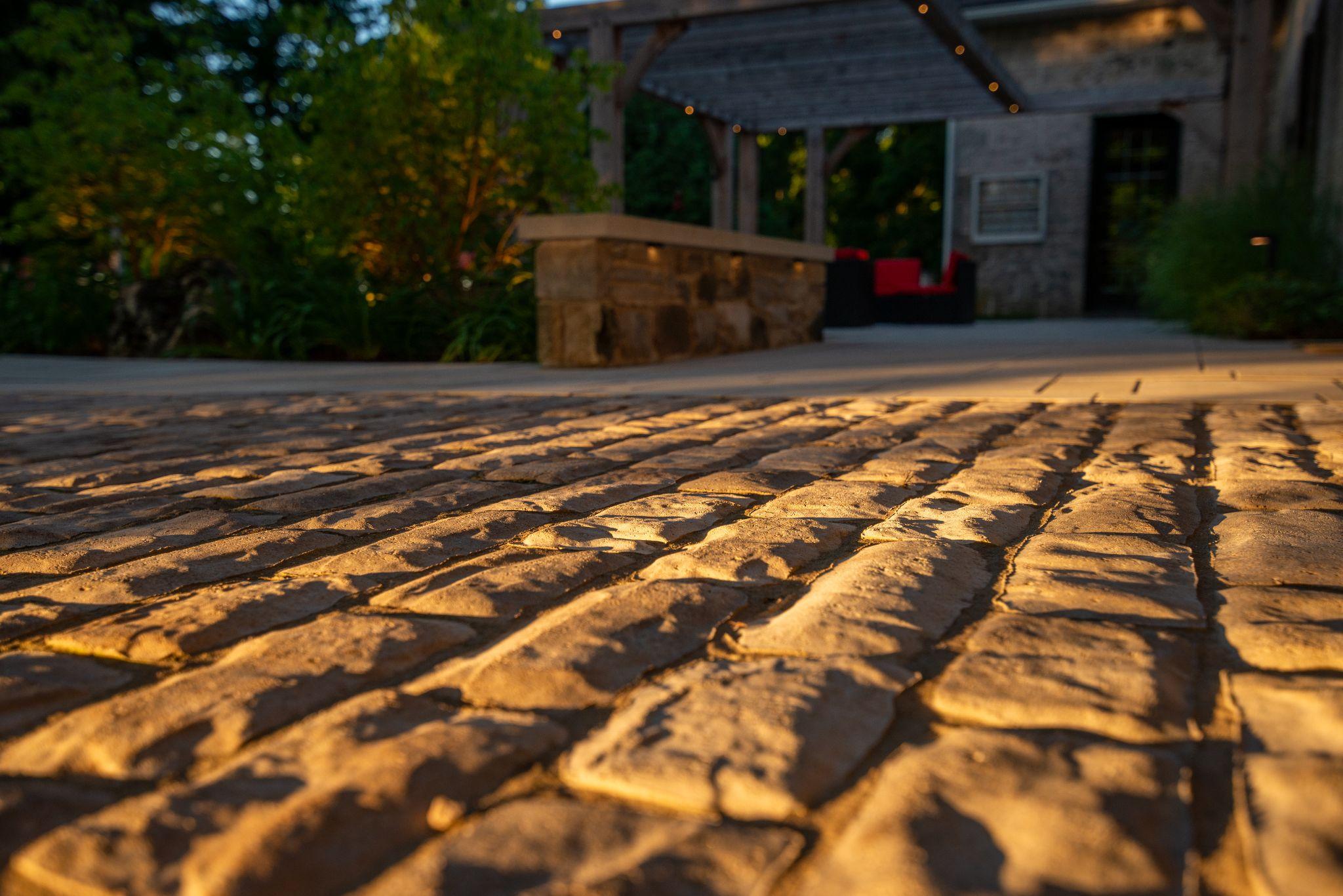
Tumbled, textured 80mm pavers are a strong fit for graded driveways across the Grand River Valley, where the paver has to do more than look good — it has to hold up under vehicle weight on an actual grade. The tumbling process softens the paver’s edges and gives it a worn, slightly irregular finish that resists staining better than a smooth-faced paver, and it comes in enough colour and pattern combinations to still suit a wide range of home styles, from older farmhouses to newer builds. Of all the interlocking driveway ideas on this list, this is usually the first one we bring up for a sloped property where durability matters as much as looks.
2. Large-Format Slab Pavers for Modern Sloped Driveways
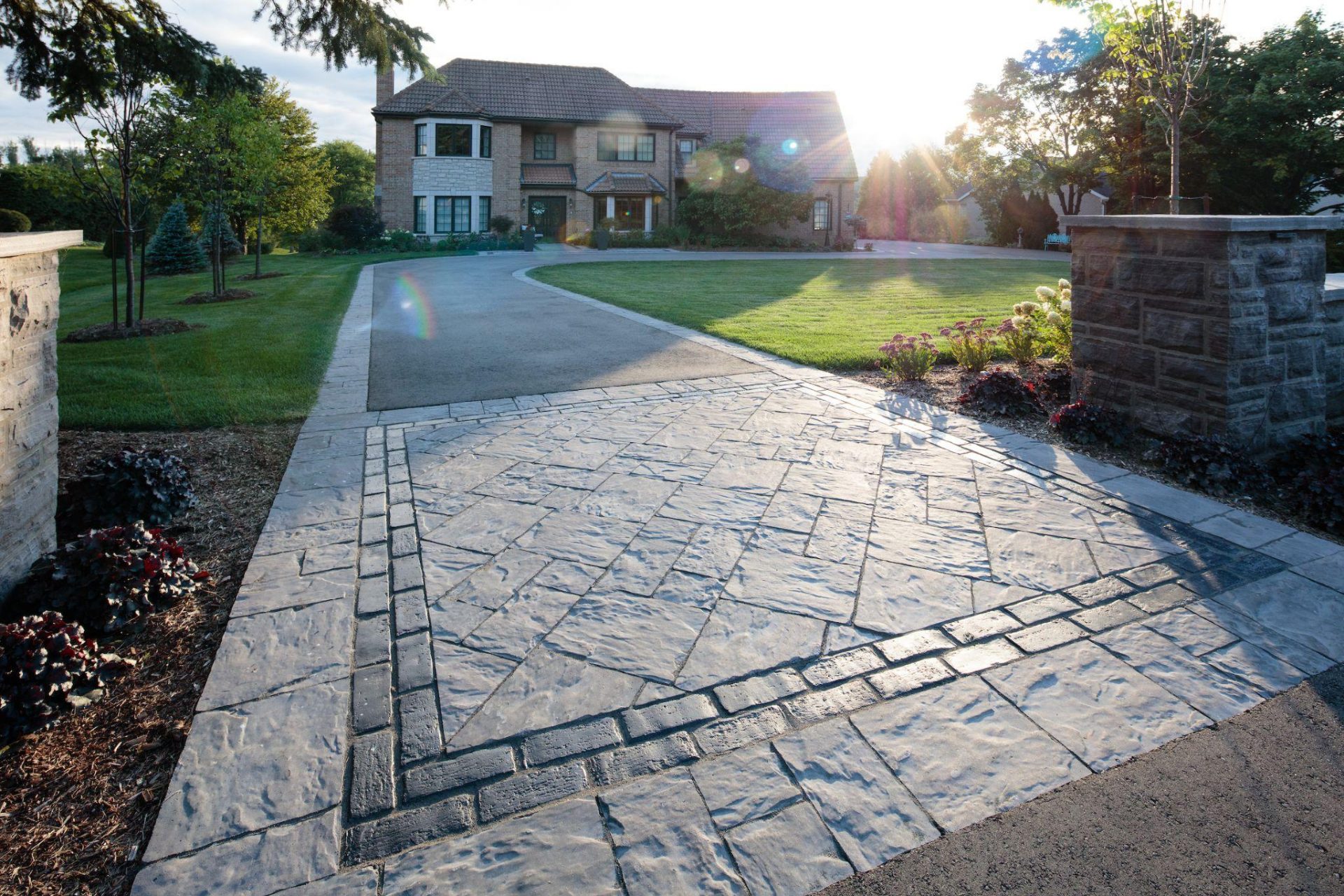
Large-format slab pavers give a graded Guelph driveway a cleaner, more modern look than smaller traditional units, while still handling the elevation changes common on sloped lots. Fewer joints across a larger surface area means a more streamlined appearance, though it also means base preparation has to be more precise, since a large slab shows unevenness more visibly than a smaller unit would. This is one of the more popular interlocking driveway ideas among homeowners updating a plain concrete driveway who want a genuine style change rather than a like-for-like replacement.
3. Herringbone-Pattern Interlock for Traction
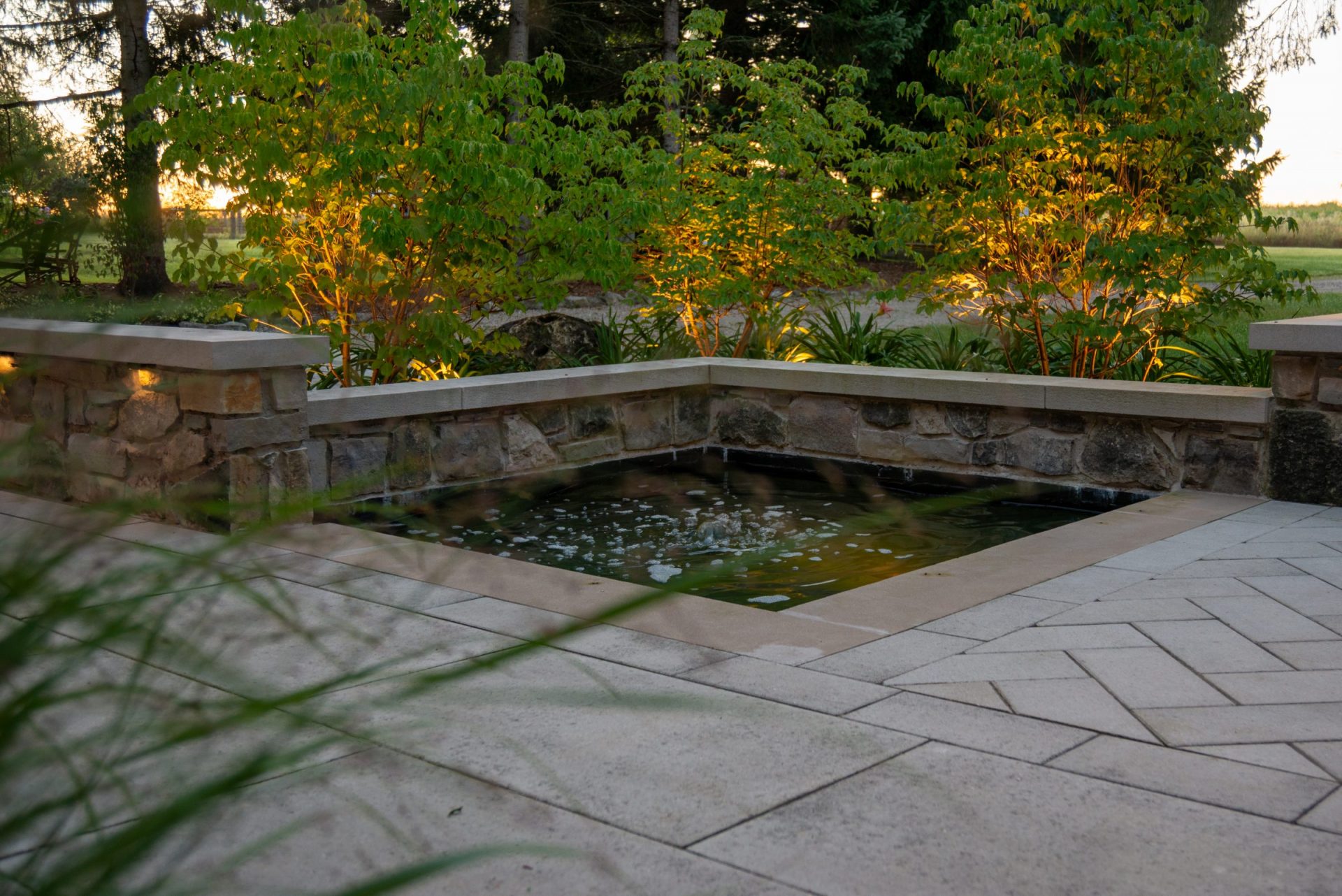
A herringbone laying pattern locks individual pavers together on two axes instead of one, which meaningfully reduces shifting and slipping compared to a simple running-bond layout. That extra grip matters more on the hillier driveways found around Fergus than it does on a flat lot, particularly where a driveway curves or where vehicles brake on a slight decline heading toward a garage. It’s one of the most requested interlocking driveway ideas for exactly that reason — traction is a functional concern here, not just a pattern preference.
4. Two-Tier Interlock with Retaining Border for Steep Lots
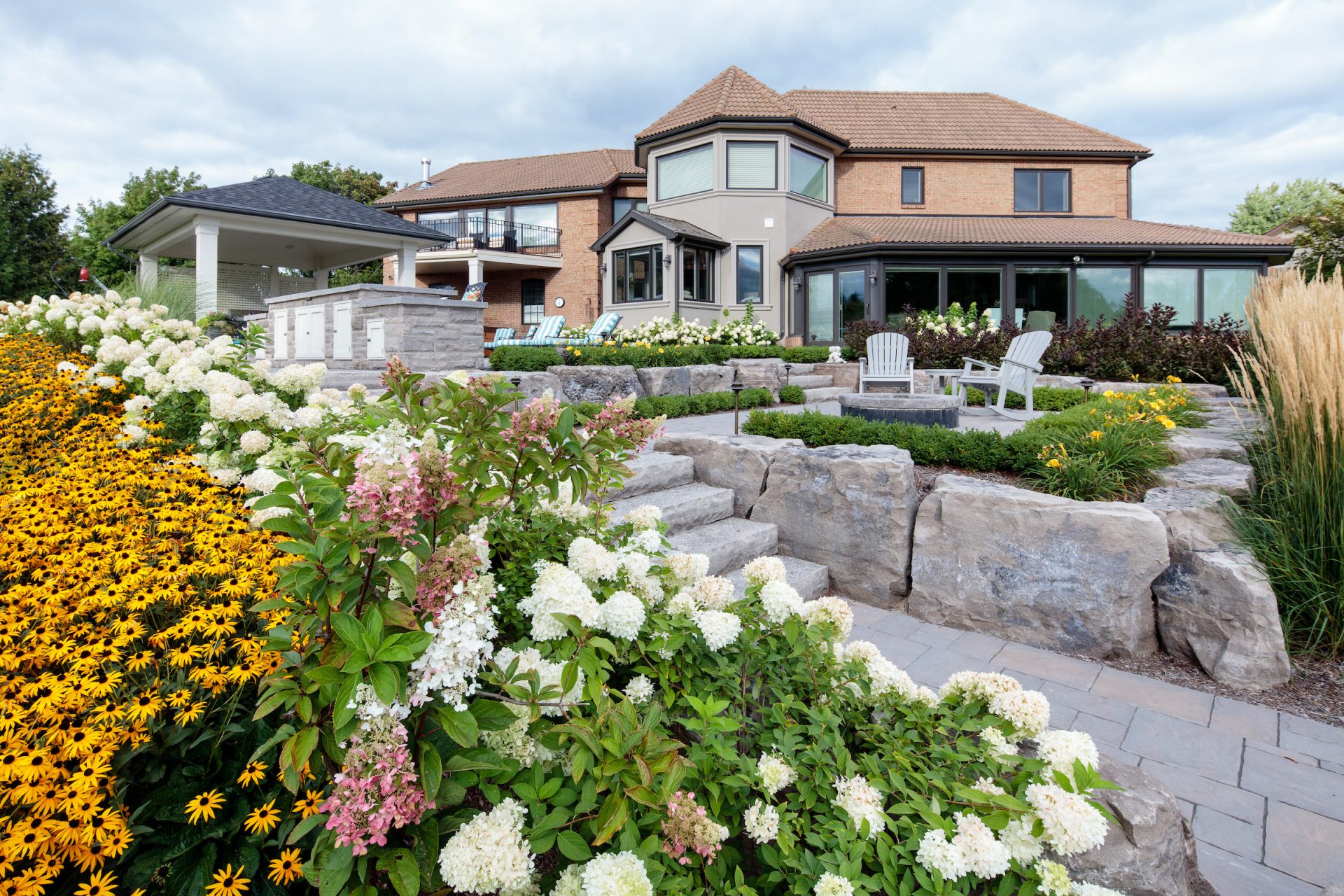
Tiered paver sections paired with a retaining border let a driveway or patio work with a steep grade change rather than fighting it, which is common on Wellington County properties where the lot drops several feet from the road to the house. Done properly, the tiering also directs runoff away from a neighbouring clay-heavy lot instead of dumping it over the property line during spring melt — a real local complaint we hear about older, poorly graded driveways, and something our landscape construction crew designs around rather than discovers after a wet spring. The Concrete Masonry & Housing Association (CMHA)‘s design standards cover slope and drainage engineering in more technical depth if you want to see the underlying guidance our layouts are based on.
5. Permeable Interlocking Pavers for Freeze-Thaw Cycles
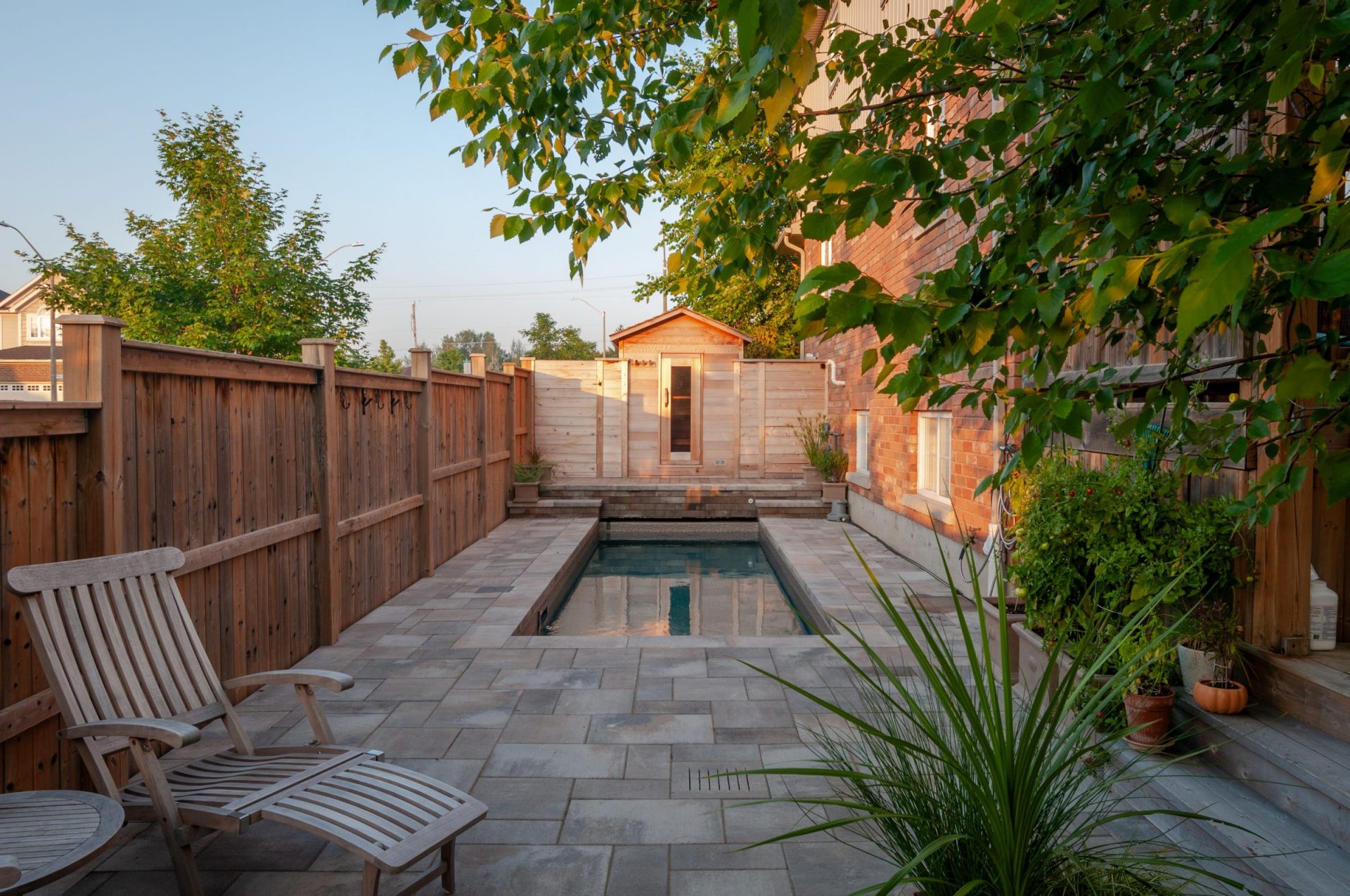
Porous, permeable pavers let water pass through the surface instead of pooling on top of it, which reduces the heaving and salt damage that come with Wellington County’s freeze-thaw winters. Standing water that would otherwise sit against a solid paver surface, freeze, and push joints apart instead drains down through the permeable joints and into the base below, which is a meaningful difference on a clay-heavy lot where the ground already drains poorly on its own. This isn’t limited to driveways, either — permeable material is increasingly common in backyard interlock design where a patio sits close to a downspout or low spot that never quite dries out.
6. Heated Interlocking Driveways for Fergus & Guelph Winters
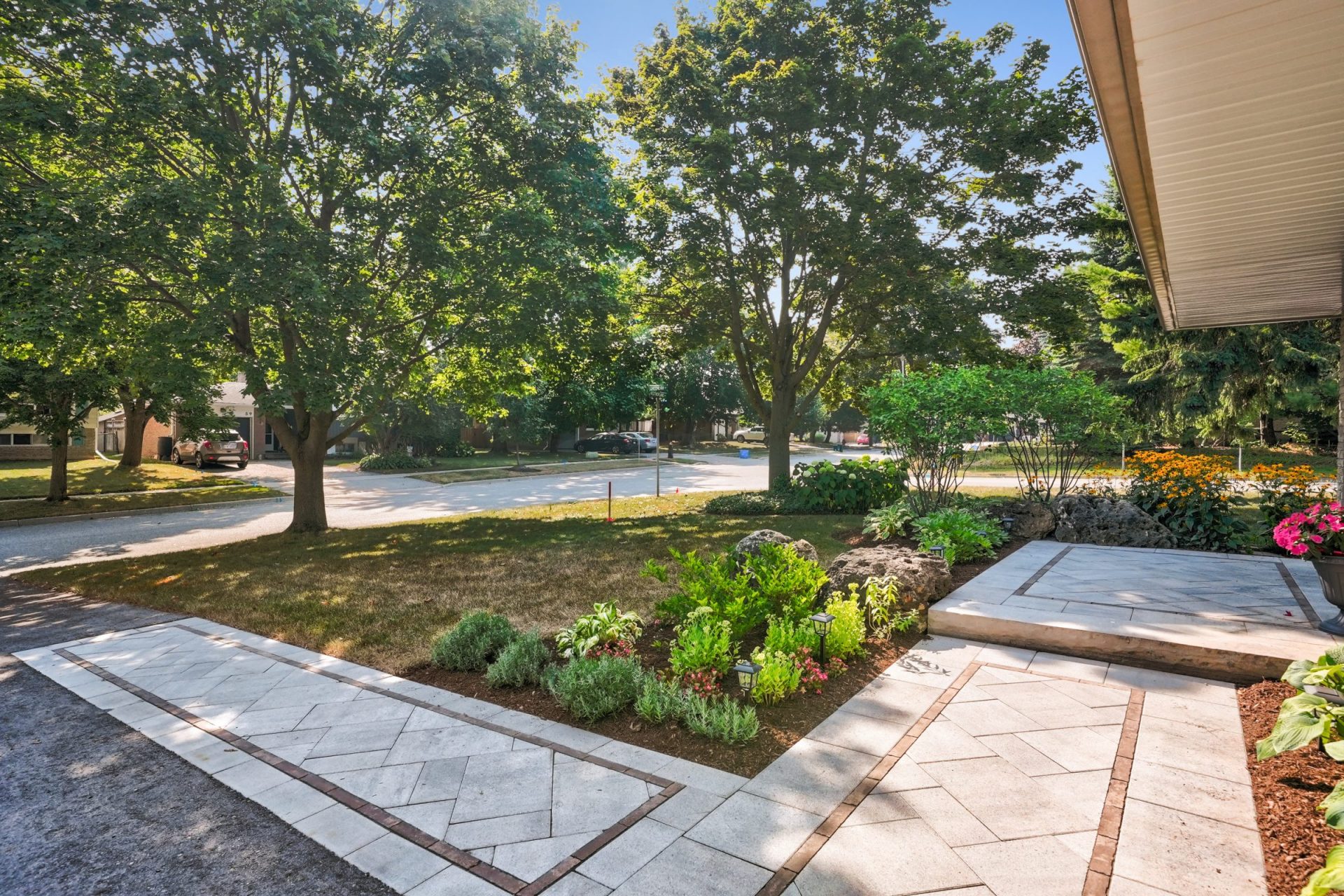
An underground heating system installed beneath the interlock melts snow and ice on contact, which keeps a Fergus or Guelph driveway clear through the winter without shovelling or repeated salting. It’s a bigger upfront investment than a standard installation, but for a steep or shaded driveway that ices over repeatedly, it can be a genuinely practical option rather than a novelty — particularly on a grade where ice buildup becomes a real safety concern each winter. It also pairs well with several of the sloped-driveway ideas above, since heating addresses the ice risk that grading and pattern alone can’t fully solve.
7. Salt-Resistant Charcoal Interlock for Driveways
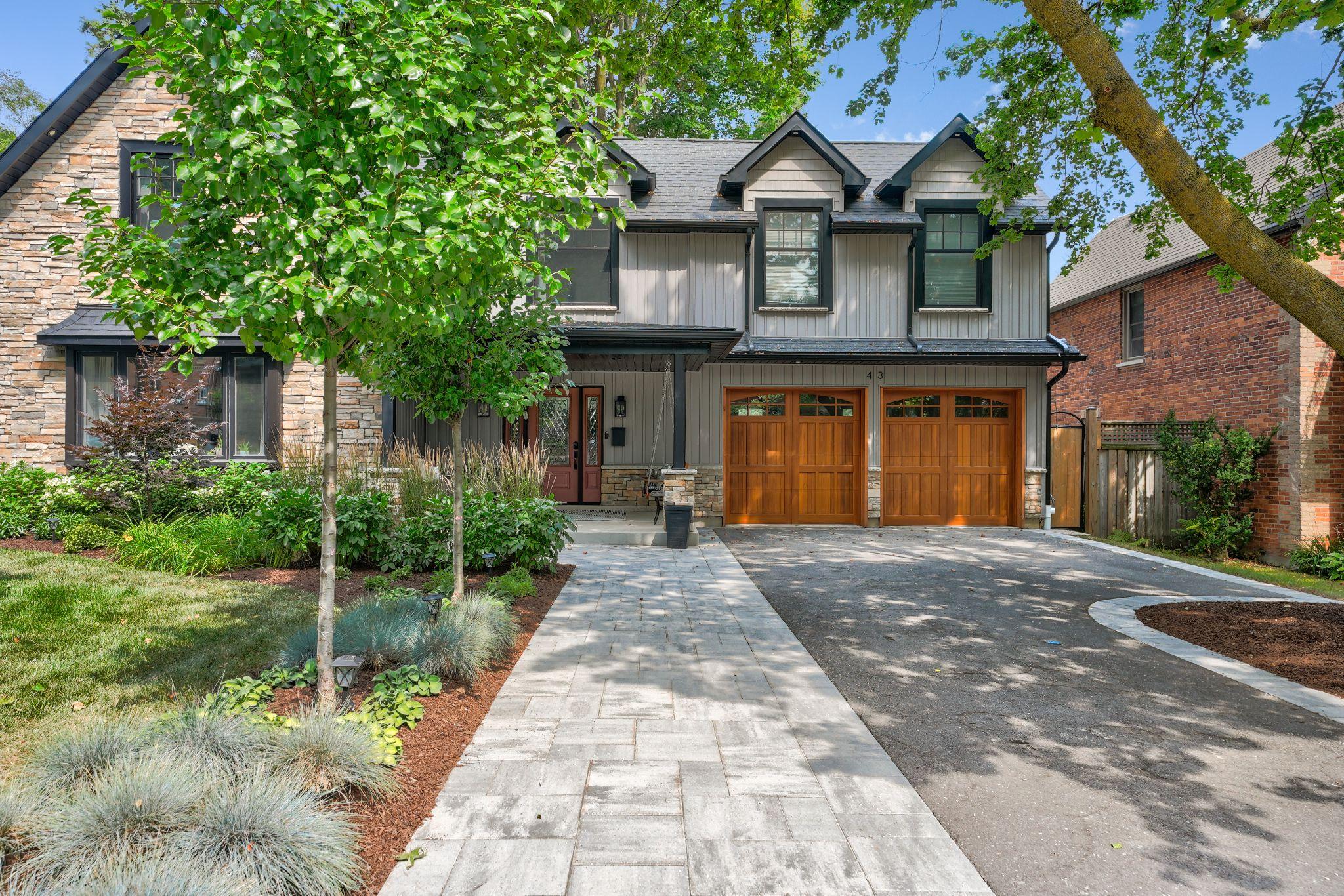
Darker, salt-resistant paver blends hold their colour and finish longer despite repeated road-salt exposure over a Guelph winter, where lighter-coloured pavers tend to show white salt staining and surface wear more visibly after a few seasons. The trade-off is that darker material absorbs more heat in summer, so it’s a better fit for driveways than for a patio where bare feet might be an issue in July.
8. Low-Maintenance Paver Blends
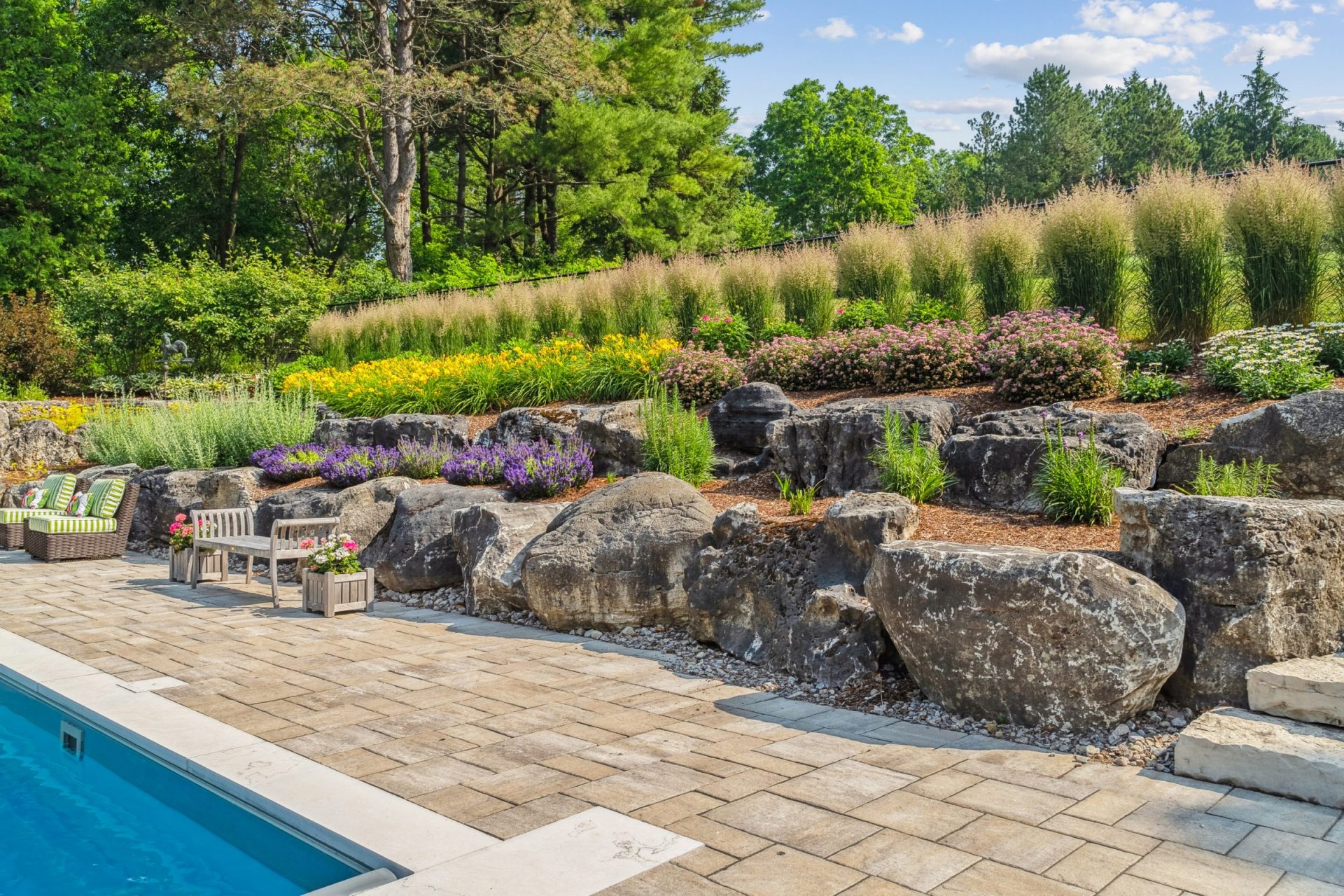
Certain material and pattern combinations are simply easier to live with through Wellington County’s freeze-thaw conditions — denser paver blends, tighter joint tolerances, and patterns that distribute load evenly all cut down on the resealing and spot-repair work an installation needs over time. This applies just as much to backyard interlock ideas as it does to driveways; a low-maintenance patio blend means fewer weekends spent on upkeep and more time actually using the space. If minimizing ongoing upkeep matters more to you than a specific aesthetic, this is worth discussing directly with whoever’s designing your layout before pattern and material get finalized.
9. Old-World Cobblestone Patios for Century Homes
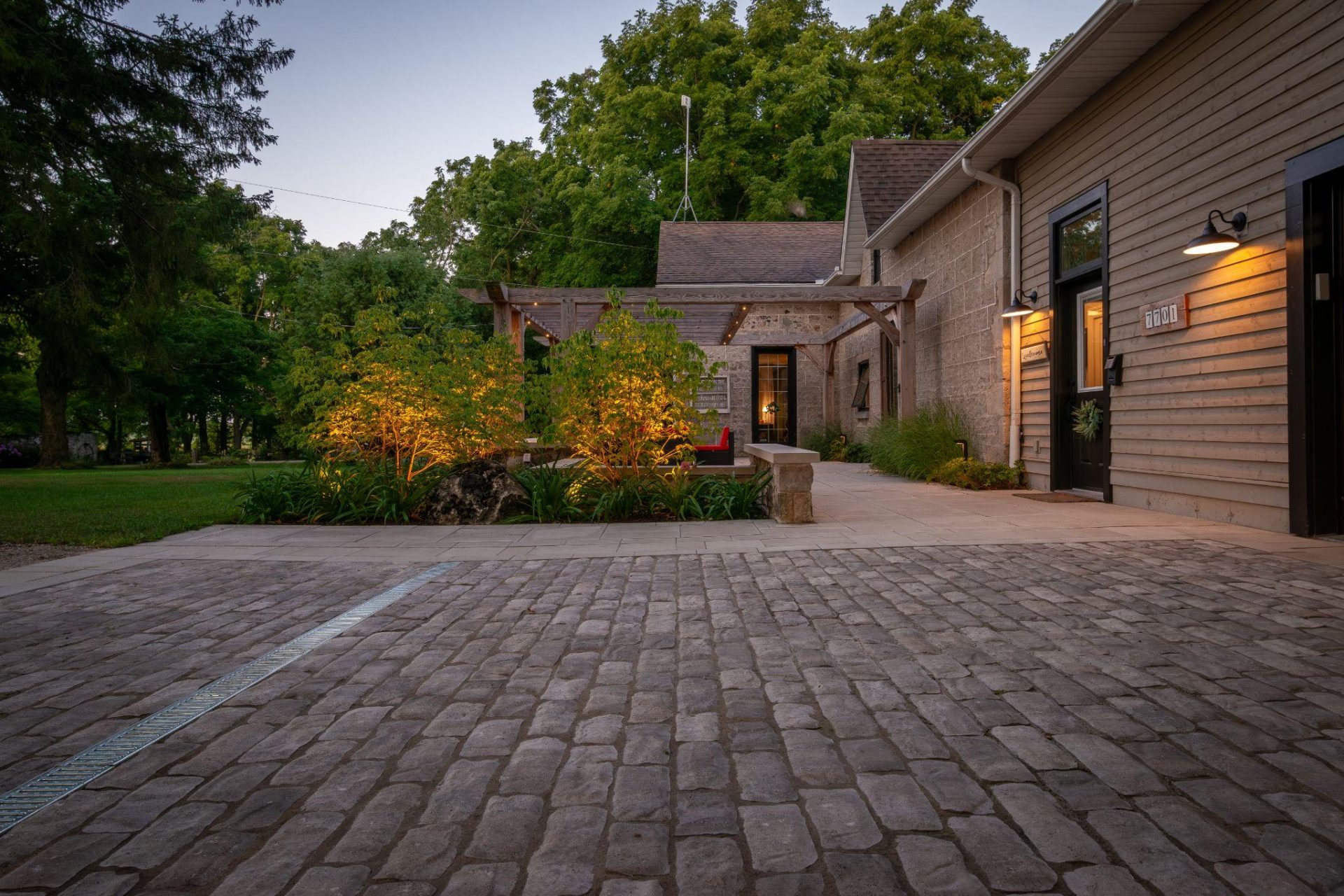
Cobblestone patio designs echo the character of older Fergus and Elora properties, built to complement heritage architecture rather than compete with it — a smooth, uniform modern paver can look noticeably out of place next to a century home’s original stonework or brick. Some homeowners restoring an older property specifically ask for interlocking stones rather than standard concrete pavers, since the term still carries that older, more textured connotation even though the manufacturing process is largely the same today. Older properties in this area sometimes carry different setback or lot-line considerations than newer builds, so it’s worth confirming the current County of Wellington building permit guidance for your specific address before finalizing a patio layout near a property line.
10. Herringbone Clay-Paver Patios Matching Heritage Facades
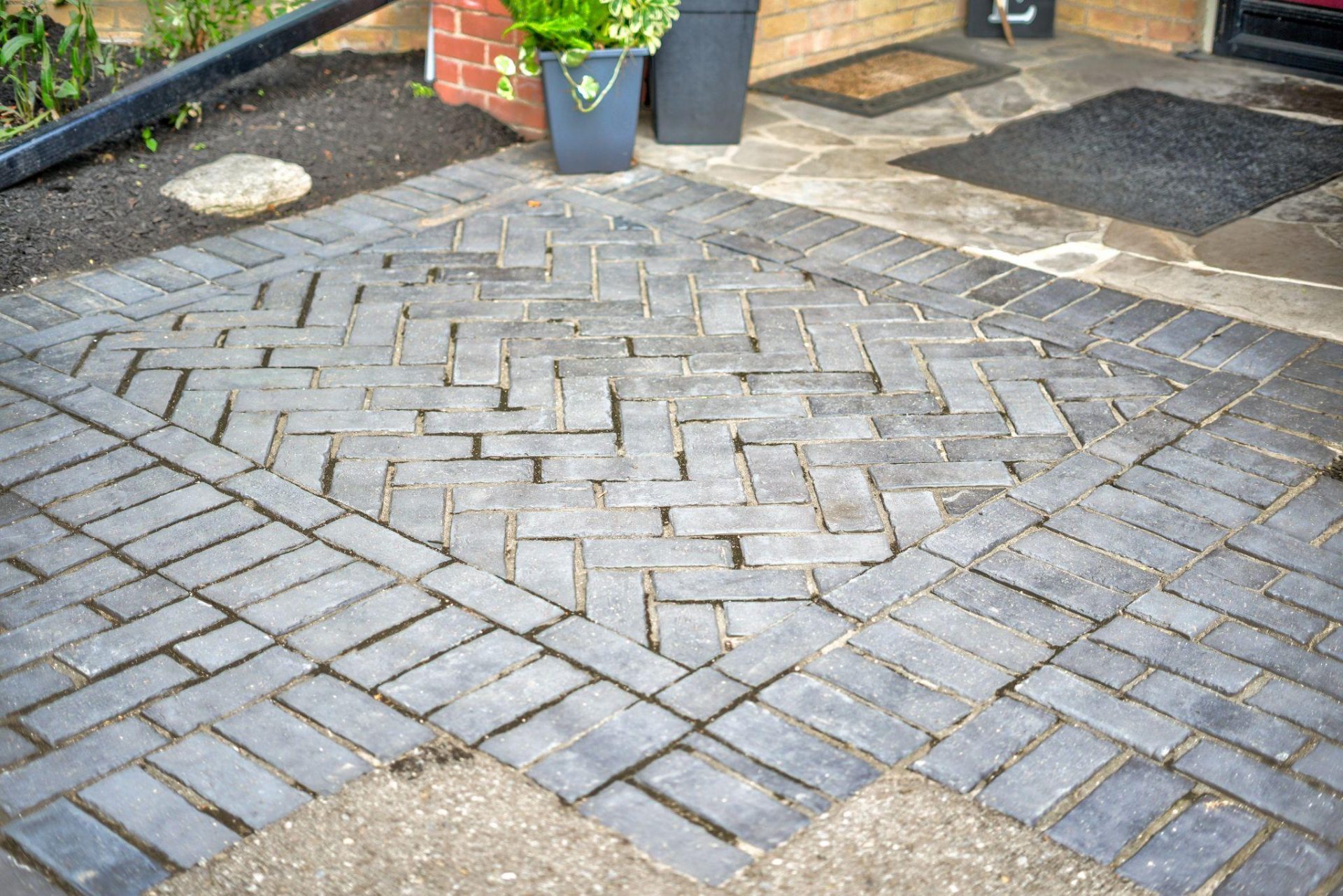
Clay-toned pavers laid in a herringbone pattern pick up the reddish tones common in the brick and stone facades found on Elora’s heritage homes, creating a patio that reads as an extension of the house rather than an obviously separate addition. This is one of the more common requests we get from homeowners restoring or updating a century property who want something that looks like it could have been there since the house was built.
11. Circular Paver-Inlay Patios for Century-Home Gardens
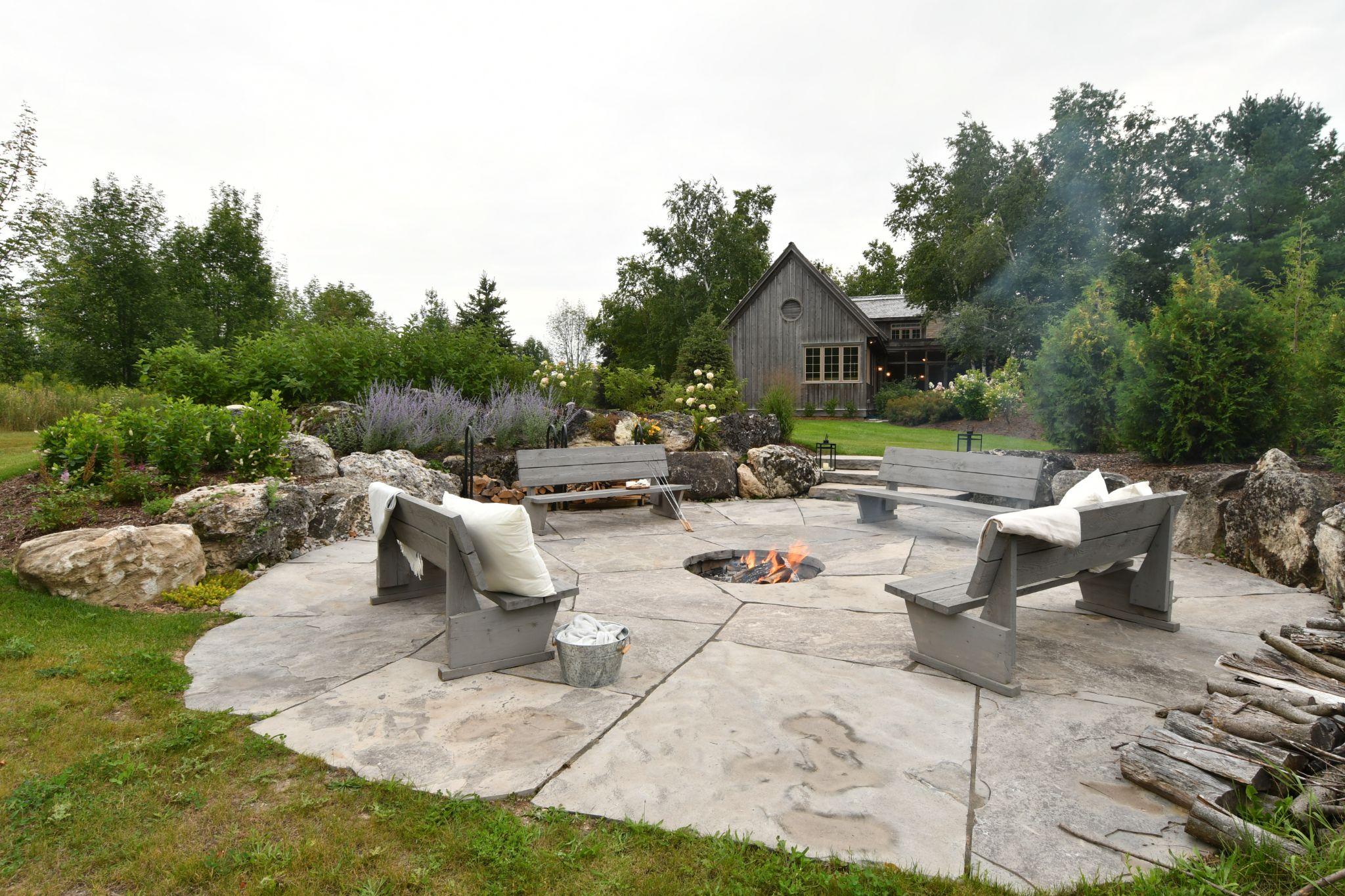
A circular inlay design creates a natural focal point for a garden patio on a Fergus character-home property, adding visual interest without overwhelming a smaller or more established garden layout. It’s a detail that works particularly well on older lots where mature trees and existing garden beds already define the space, since a circular interlocking patio can sit within that layout rather than requiring it to be reshaped. Our landscape design team typically sketches this kind of layout on-site, working around whatever’s already established in the garden rather than clearing it first.
12. Reclaimed-Look Interlock Walkways for Century-Home Entrances
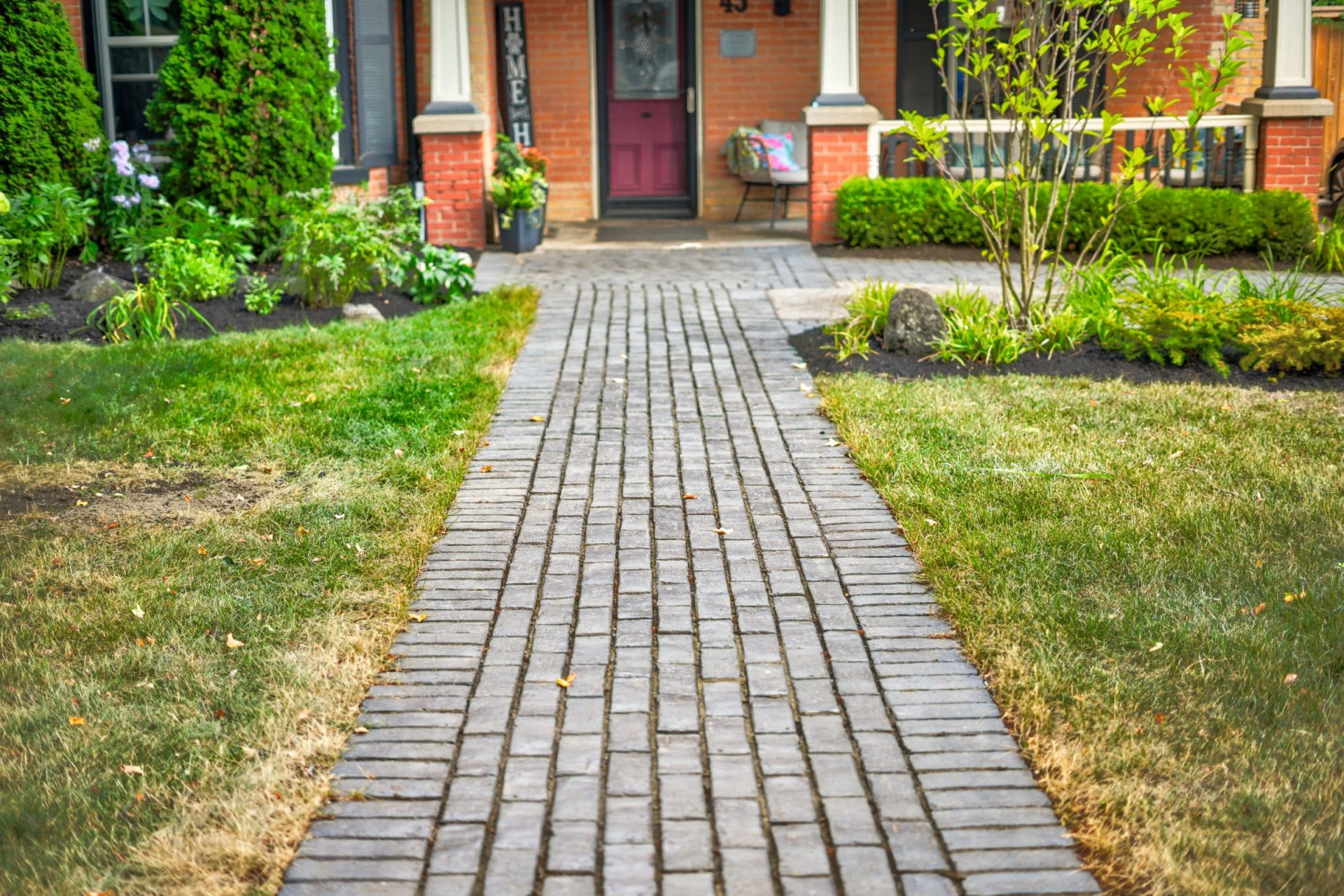
Reclaimed-look pavers create a walkway that feels original to the property rather than newly installed, tying a century-home entrance in Fergus or Elora together with the rest of the home’s existing character. The finish mimics worn, weathered stone without the maintenance headaches of reclaimed material, which matters on an older property where the front entrance is often the first thing a visitor — or a future buyer — actually notices.
See an idea you like? Request a consultation, and we’ll tell you what it takes on your property.
13. Large-Format Linear Pavers for Modern Driveways
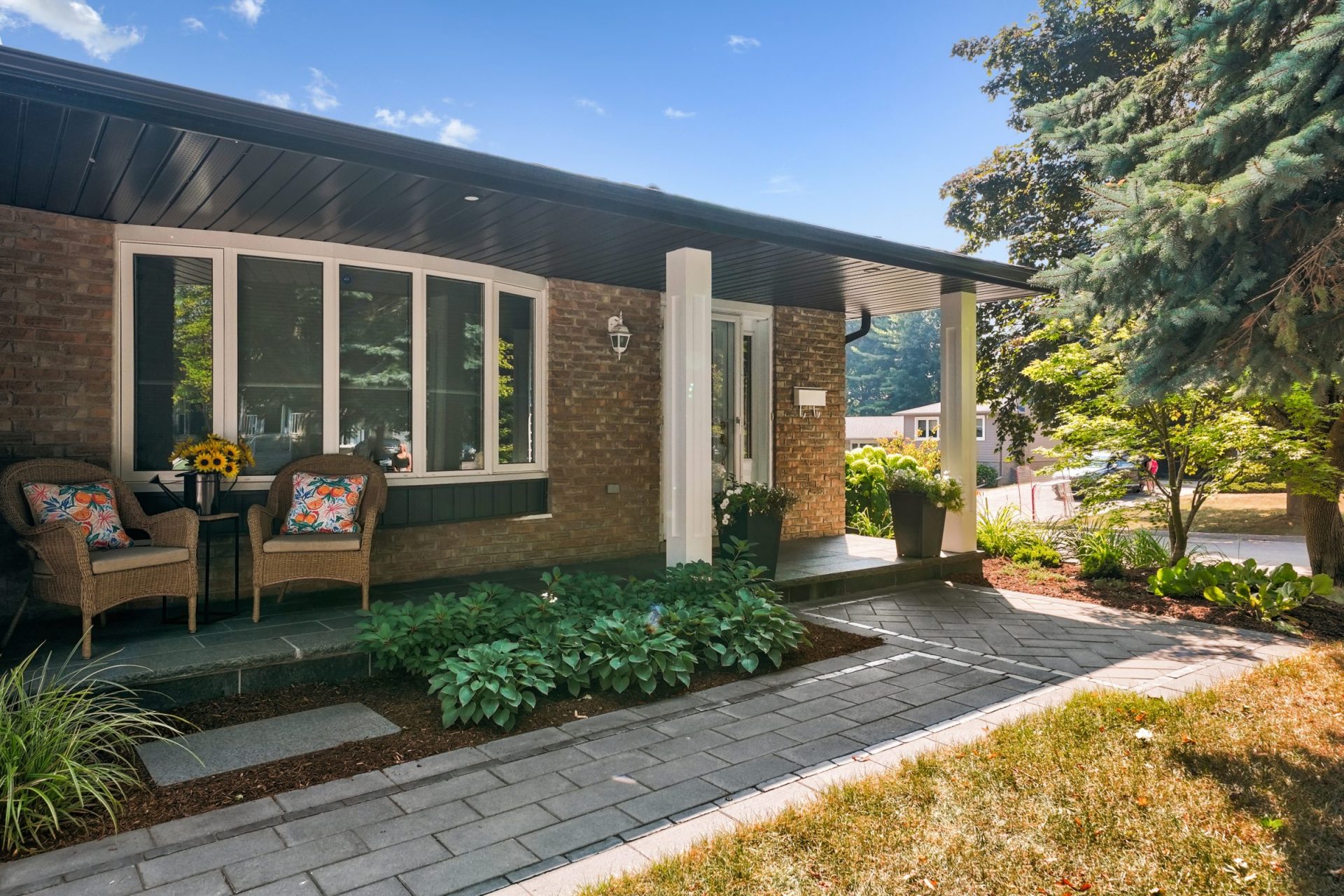
Linear paver bands suit the newer, smaller-lot driveways found in newer Guelph subdivisions, giving a fairly standard driveway footprint a tailored, modern edge without needing extra square footage to make an impact. The clean lines read as more intentional than a uniform paver field, which matters more on a smaller lot where every visible surface gets noticed. Among the interlocking driveway ideas here, this is generally the lowest-cost way to make a modest subdivision driveway feel deliberately designed rather than default.
14. Two-Tone Interlocking Bands for Newer Subdivision Homes
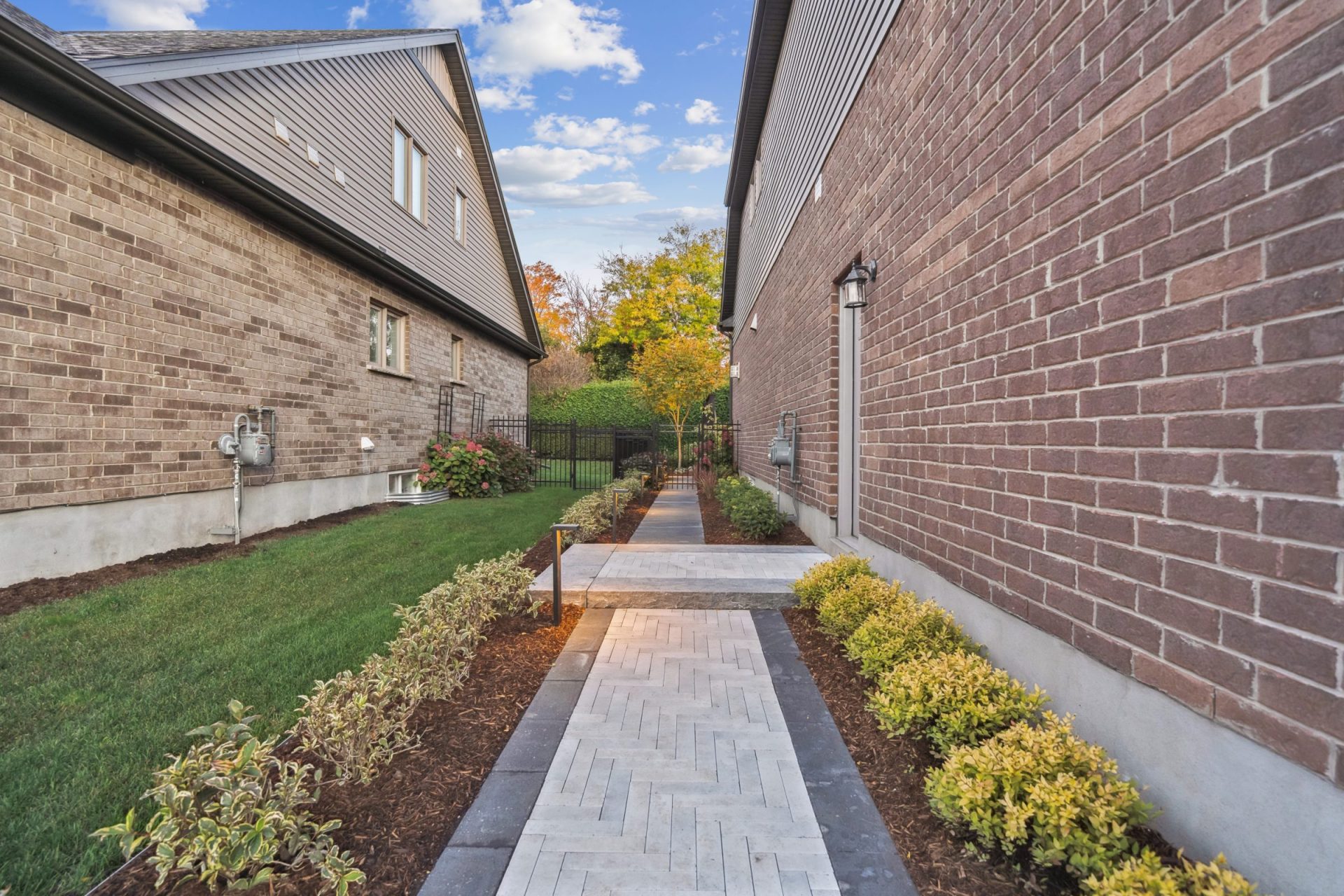
Two-tone banding adds contrast and definition to a subdivision driveway without requiring a full paver replacement, making it a practical option for homeowners who want to upgrade an existing plain driveway’s look on a more modest budget. A contrasting border along the edges or down the centre is often enough to change how the whole driveway reads from the street.
15. Minimalist Grey Interlock Patios for Small Backyards
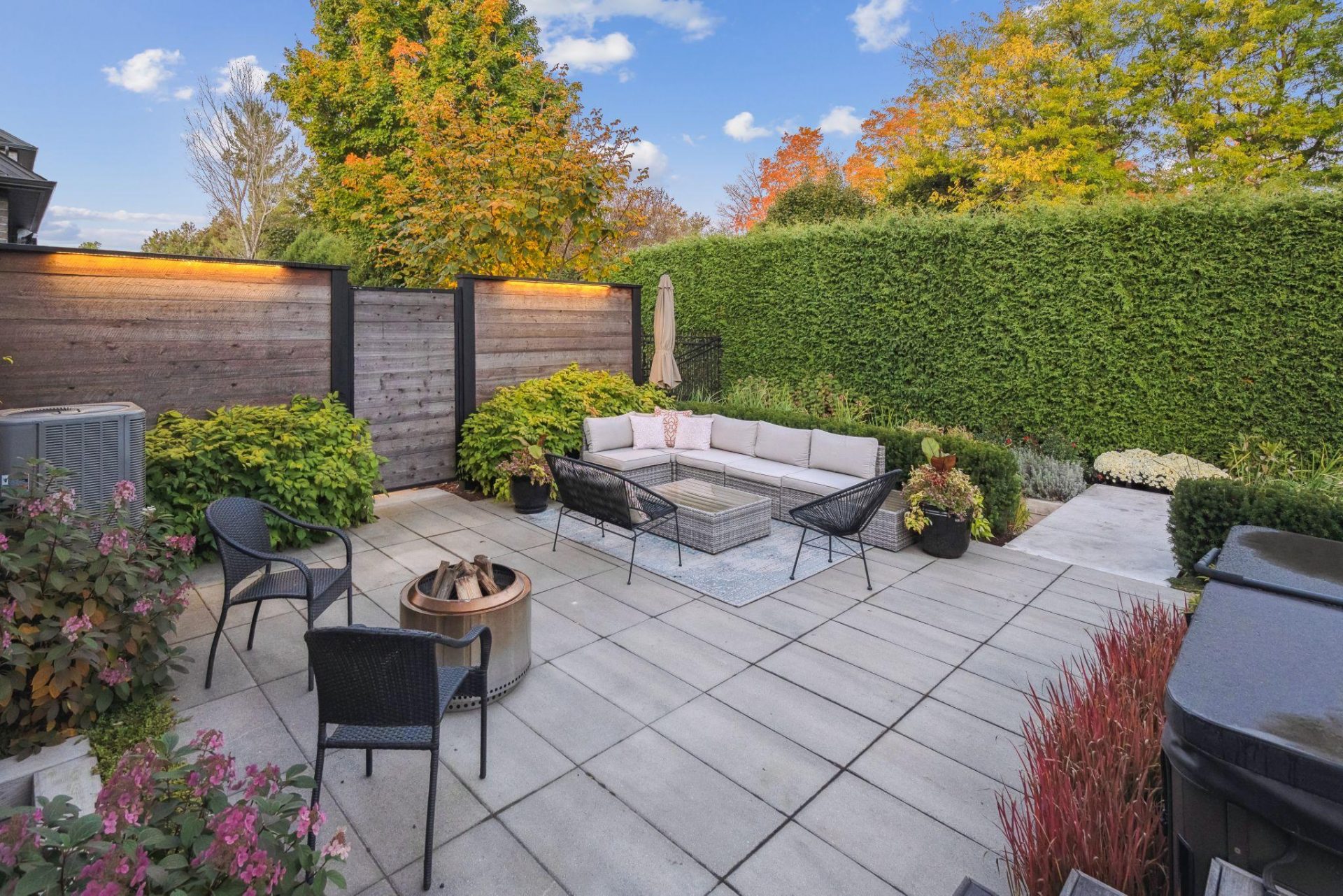
Clean, minimalist grey pavers make the most of smaller backyard patios common in newer Guelph subdivisions, where lot sizes and setback requirements leave less room to work with than an older or rural property. This is one of the more requested backyard interlock design directions for subdivision homeowners specifically because it reads as intentional rather than cramped, even on a modest footprint. On these tighter lots, interlocking patio placement relative to a neighbouring yard is worth real thought — a patio positioned to face away from a shared fence line, or screened with simple planting rather than a tall structure, tends to hold up better socially over time than one that puts every backyard conversation within easy earshot of next door.
Bringing an Interlocking Idea to Life on Your Fergus or Guelph Property
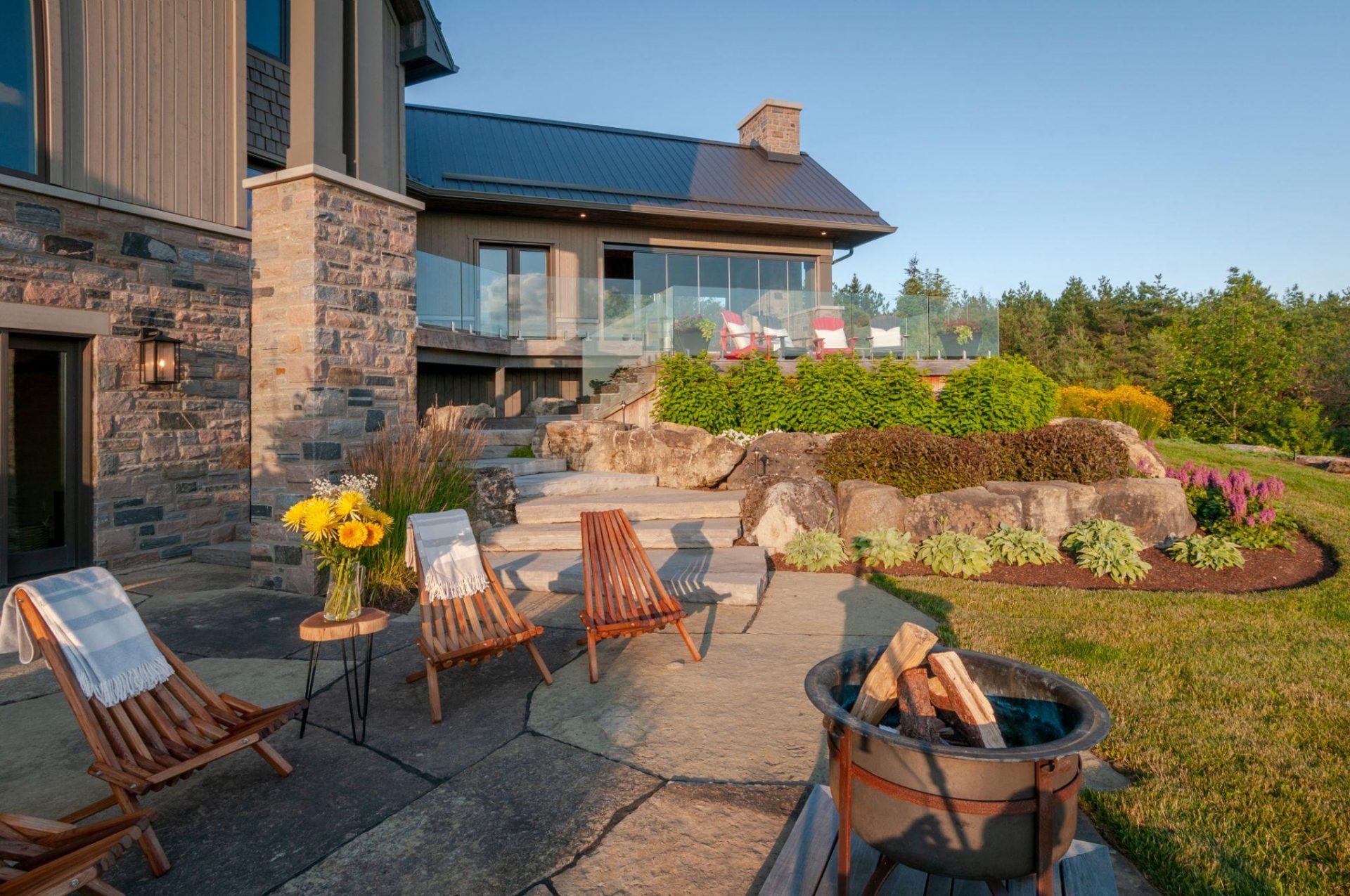
Any of the fifteen ideas laid out in this blog can work on paper and still miss the mark on your actual lot, which is why the next step after picking a favourite is a site visit from a professional. Slope, soil, and lot-line specifics change the math on every one of these designs, sometimes significantly — an interlocking patio that looks perfect in a photo may need a completely different base and drainage approach on your own clay-heavy property.
For a realistic sense of pricing, our retaining wall and interlocking cost guide breaks down local ranges by project type. If you are already comparing bids, our guide on how to choose a hardscaping contractor covers how to spot a team that will actually deliver on these designs rather than cutting corners once the excavator shows up.
At Whispering Pines, our landscape design team can translate any of these ideas into a plan tailored to your specific lot lines. Once the layout is finalized, our in-house construction crew takes over the installation. Keeping the design team, the grading team and the paver installers on the same in-house crew ensures a seamless transition—which is exactly what matters most on the sloped and clay-heavy properties featured throughout this list.
See an idea you like? Request a consultation, and we’ll tell you what it takes on your property.
Summary
To help you sort through different backyard, patio, and driveway hardscape options, this guide from Whispering Pines Landscaping provides 15 distinct layout ideas. Each design is built to address one of three primary property realities common across the Wellington County area:
- Sloped & Clay-Heavy Lots: Features like tumbled cobblestones, herringbone patterns, and permeable or heated systems designed specifically to handle heavy vehicle loads, steep grades, and freeze-thaw drainage issues.
- Heritage & Century Homes: Tailored layouts using old-world cobblestone, clay-toned pavers, or circular inlays built to complement historical architecture in Fergus and Elora while respecting older property lines.
- Newer Subdivision Properties: Minimalist grey palettes, linear paver bands, and two-tone borders optimized to maximize visual appeal and respect municipal setback rules on tighter, modern Guelph lots.
Choosing the right interlock design for your backyard or patio means balancing your personal style with the actual physical conditions of your lot. Running through these options before finalizing your design is what ensures you get a beautiful feature that performs flawlessly on your specific slope, soil, and lot lines.
Tags: