
How to Choose a Retaining Wall & Interlocking Contractor in Fergus or Guelph
If you’ve read full hardscaping guide and you’re now comparing quotes, your next logical step is vetting your options. The challenge is that many homeowners have already been burned by a vague estimate, a crew that vanished mid-project, or a wall that started leaning within a year.
This guide helps by breaking down a practical checklist of six things to ask before you hire any retaining wall contractors or interlocking contractors bidding on your property. Our goal is to give you the questions your need to ask so that you can confidently evaluate contractors, protect your investment, and ensure your project is built to last in our local terrain. Run through it while you’re still comparing bids, not after you’ve already picked one, since most of these questions are far more useful before a contract than after.
Step 1 — Confirm They Regularly Work in Your Part of Wellington County
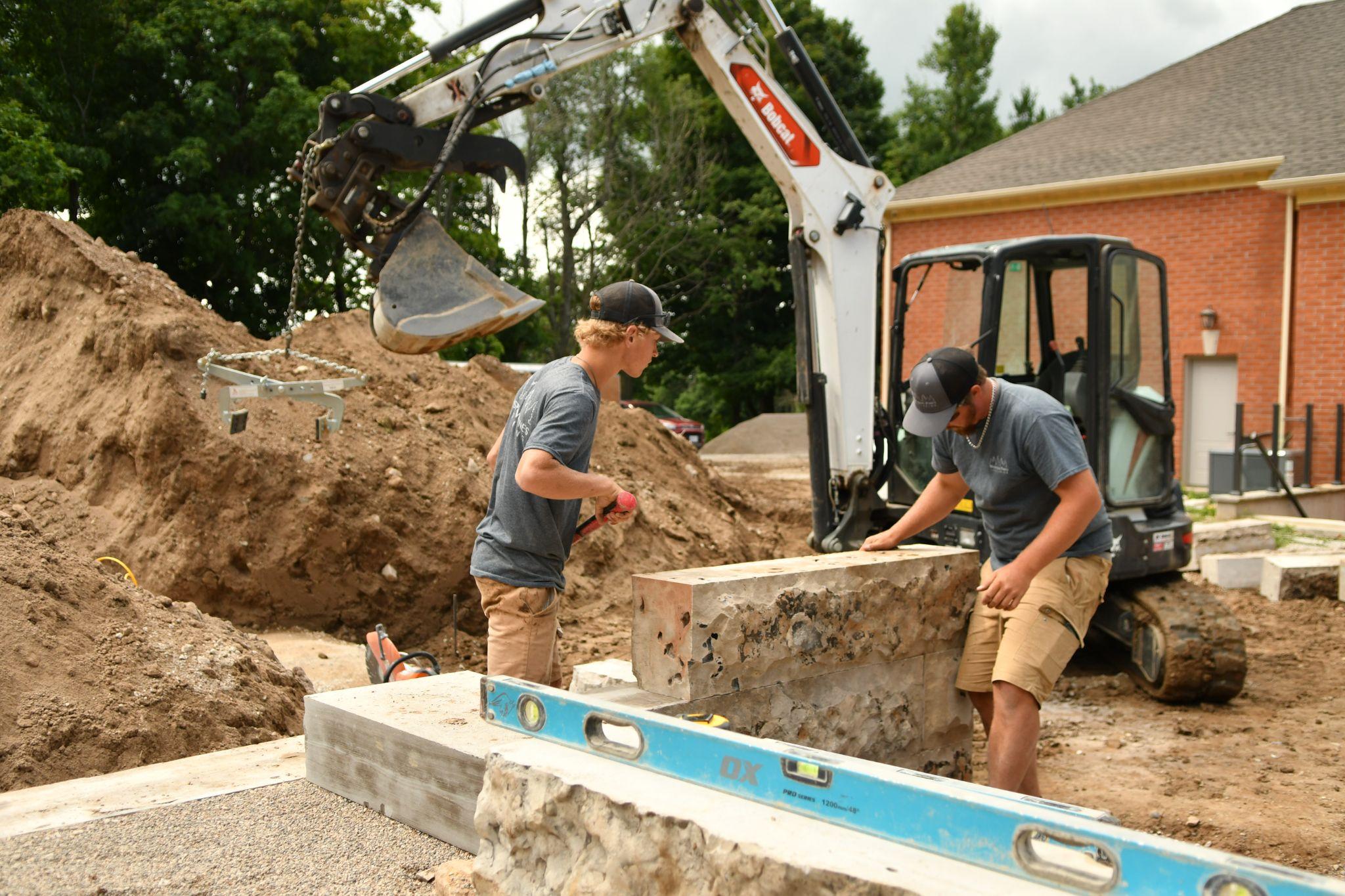
Plenty of retaining wall contractors technically list Guelph or Fergus as part of their service area without actually prioritizing the drive for a smaller residential job. It’s common for companies based out of Kitchener or Waterloo to bid on Wellington County work and then push the schedule back repeatedly once a bigger, closer job comes in — not out of bad faith, necessarily, just logistics. A crew based an hour away has less incentive to reshuffle a schedule for a driveway or wall on your street than a crew that’s already got three trucks working within twenty minutes of your address.
A fair question to ask directly: how many retaining wall or interlocking jobs is this company currently running in Fergus, Guelph, or the surrounding townships? A contractor who answers with specifics and maybe even a nearby address they’re finishing up is telling you something different than one who gives a vague “oh yeah, we’re out there all the time.”
It’s also reasonable to ask how they handle scheduling conflicts between a Wellington County job and something closer to their home base — the answer tells you a lot about where you’d actually sit on their priority list if things got busy.
At Whispering Pines, we keep a Guelph location specifically so that this isn’t a hypothetical for us — it’s a short drive to most of the Fergus and Guelph jobs we run, not a special trip.
Step 2 — Check Local Association Membership
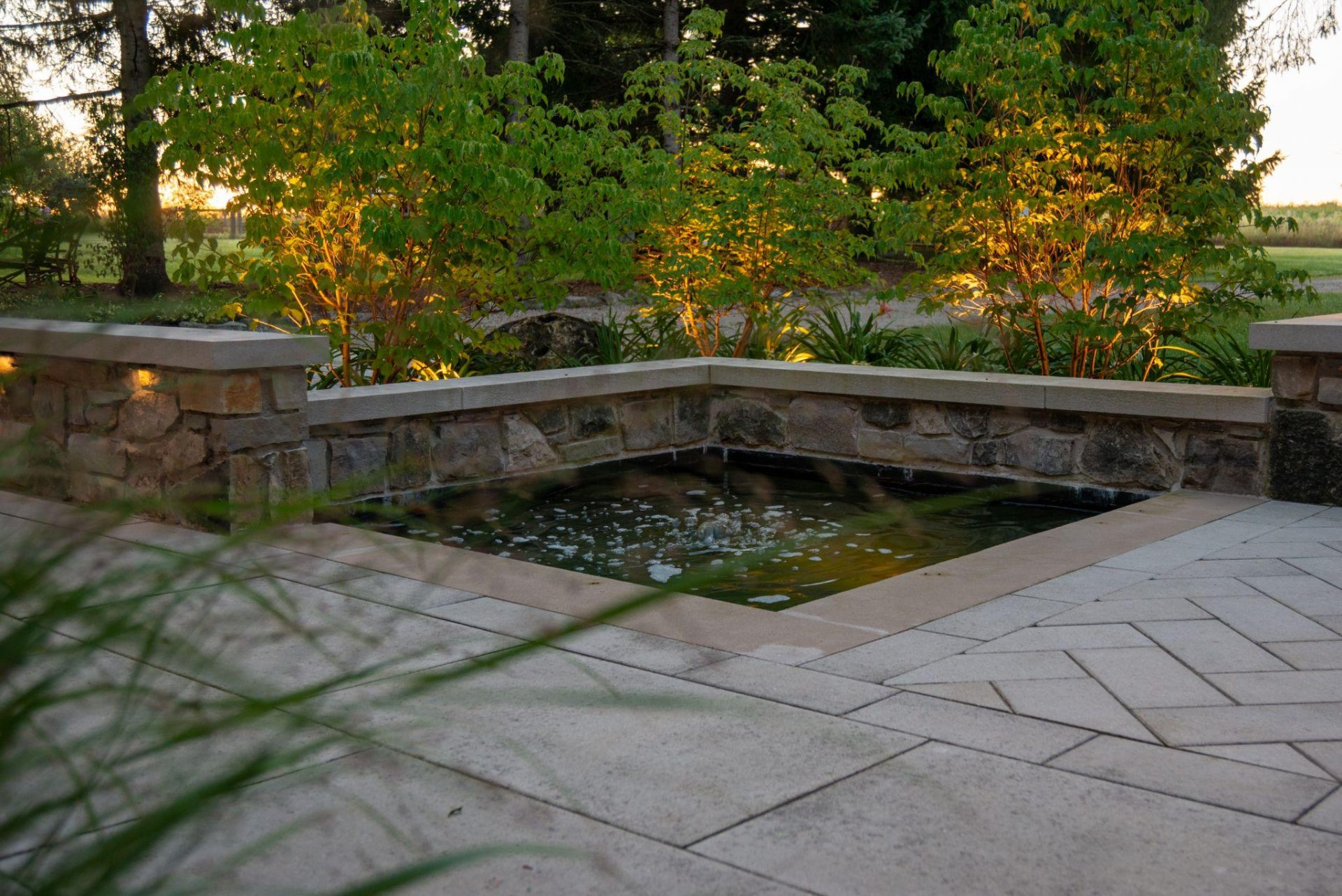
Membership in Landscape Ontario, the Centre Wellington Contractors Association, or the Grand Highlands Home Builders’ Association signals a baseline of accountability — these organizations have standards to maintain and members to answer for. The useful part is that membership is verifiable, not just something printed on a truck door. Check the Centre Wellington Contractors Association membership directory directly rather than taking a contractor’s word for it, since claimed membership and current, paid membership aren’t always the same thing.
This takes about two minutes and is worth doing before you get further into the conversation. Search the association’s public directory for the company name, confirm the listing is current for this year rather than an old cached page, and note whether the membership category matches the work you’re hiring for. Any established Guelph landscaping company with genuine local roots should have no trouble having you check this — hesitation about a two-minute directory search is itself a signal. If a contractor lists an association but isn’t actually listed on that association’s own directory, that’s worth asking about directly — sometimes it’s an oversight on the association’s end, but often it means the membership lapsed and was never renewed.
Step 3 — Ask Who Actually Builds the Wall And Lays the Interlock
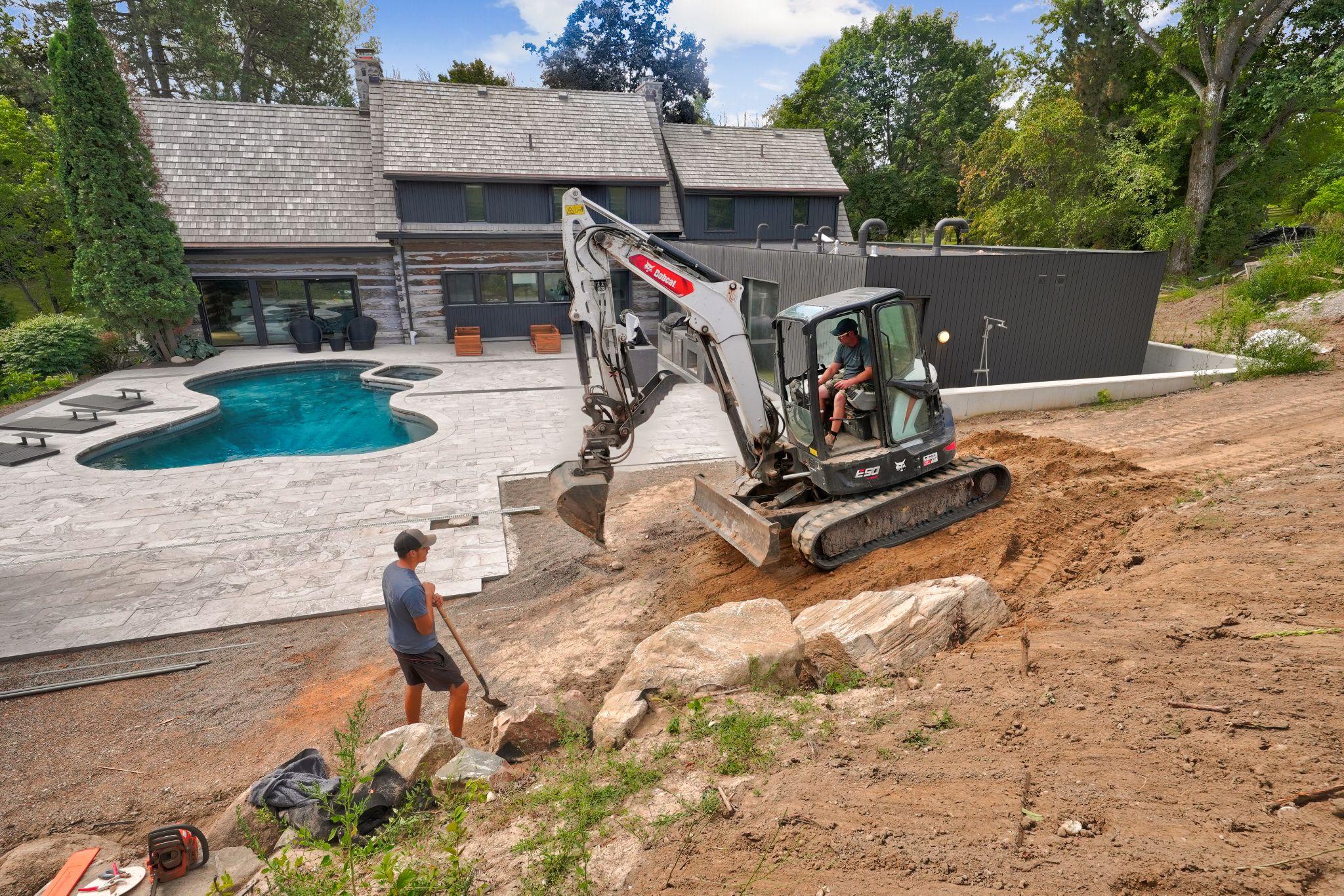
This is one of the biggest differences between retaining wall contractors that homeowners rarely think to ask about upfront: is the crew that gives you the quote the same crew that shows up to excavate, grade, and build? Some companies keep one crew on-site from the first shovel to the final walkthrough. Others sell the job and then subcontract out the excavation, the base work, or the wall itself to whoever’s available that week.
On a sloped or clay-heavy Wellington County site, that handoff is exactly where mid-project delays tend to show up. A subcontracted excavation crew grades the slope to their own read of the site, hands it off, and the wall crew shows up a few days later to find the grade doesn’t match what they’d planned for — now everyone’s waiting while someone re-grades, and your project timeline slips by a week or more.
At Whispering Pines, we keep this work completed in house specifically to avoid that kind of stall: the same people who dig it also build on it, so there’s no handoff for a miscommunication to hide in.
Step 4 — Get an Itemized Quote, Not a Lump Sum
A single number on a page tells you almost nothing about what you’re actually paying for. A transparent quote from any of the interlocking or retaining wall contractors you’re comparing should break out excavation, base material, drainage provisions, edge restraint, and sealing as distinct line items — not folded into a single total that’s impossible to compare with a second bid.
This matters most when you’re comparing two quotes that look close on the surface. A $1,500 difference between two retaining wall quotes could mean one contractor is skipping proper drainage behind the wall to hit a lower number, or that the higher quote includes engineering costs the lower one is quietly deferring to you later. Without an itemized breakdown, you can’t tell which is which until something goes wrong after the fact. If a contractor won’t itemize, or gets vague when you ask which parts of the quote cover the site-specific issues on your property — clay excavation, slope grading, delivery distance — that’s a red flag worth taking seriously before you sign. Read our blog on interlocking and retaining wall costs for a sense of what these projects typically cost in our area before you start comparing numbers.
Comparing quotes? Request a consultation with a crew that’s been building in Fergus and Guelph since 1993.
Step 5 — Ask About Engineering and Permits for Taller Walls In Your Area
Taller retaining walls can trigger engineering sign-off and permit requirements, and a reputable local contractor should raise this with you unprompted rather than waiting for you to ask. If a contractor quotes a tall wall without mentioning permits or engineering at all, that’s not a sign they’re attempting a shortcut — or that they haven’t thought that far ahead — and you’ll be the one dealing with a stop-work order or a failed inspection later. We won’t state a specific height threshold here, since that number depends on your exact wall design and township, but both Centre Wellington and the City of Guelph are relevant permitting authorities for most projects in this area, and it’s worth confirming directly with them rather than relying on a contractor’s estimate of what’s required.
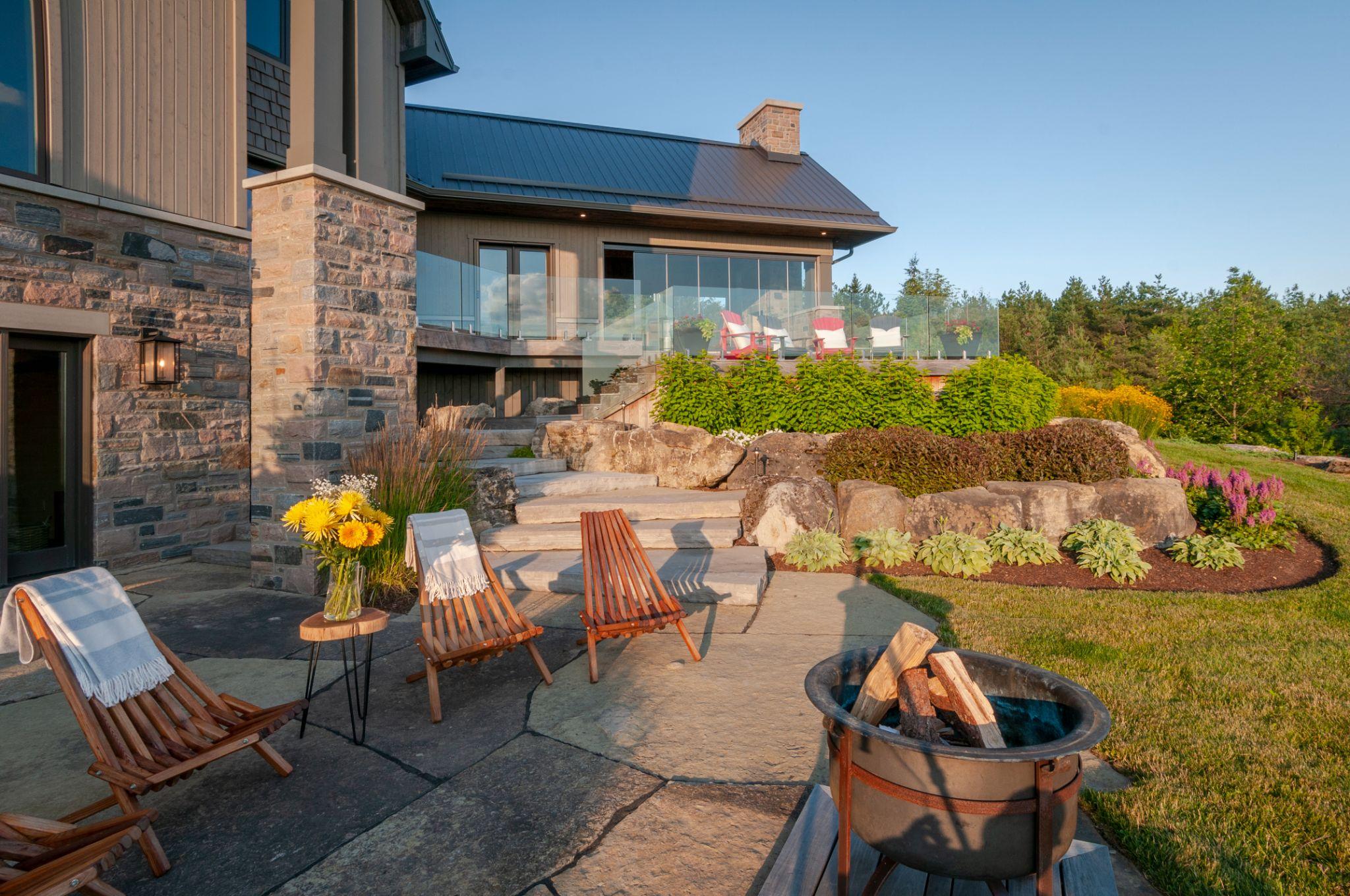
It’s also worth asking what materials are actually available for the job, because a wall doesn’t have to be purely functional. Natural boulder and natural stone options let a wall do double duty as a landscape feature, not just erosion control. At Whispering Pines, we think about design as much as engineering when we’re proposing wall materials, and any contractor who treats every wall as a plain grey block by default probably isn’t thinking about how it’ll actually look from your kitchen window in five years.
Step 6 — Ask What Happens After Installation
A wall that looks great on installation day but gets no follow-up attention often leads to issues down the road. Ask directly about the structural warranty and whether the contractor provides follow-up service, or if you’re entirely on your own once the final invoice is paid. For context, we back our work at Whispering Pines with a two-year warranty that covers both the wall structure and the drainage system behind it.
Be sure to ask what voids that coverage, too. Some companies quietly exclude damage from common things like improper snow removal or later landscaping changes, which matters if you plan on doing more work around your property.
You also need to look past the stonework itself. The surrounding softscaping—including the soil, plantings, and grading—directly impacts how well the feature holds up over time. Even a perfectly constructed wall can face water damage if poor drainage from the surrounding landscape finishes by pushing runoff right back into the structure.
Finalizing Your Decision with Confidence
Choosing the right hardscaping team is what ultimately determines the long-term success of your project. By checking for a strong local presence, verifying current industry memberships, and ensuring the work is handled by an experienced in-house crew, you can easily avoid the common pitfalls of vague contracting. Demanding an itemized quote, addressing permit requirements early, and securing a clear structural warranty will protect your investment and guarantee a build designed to handle our local climate for years to come.
Comparing quotes? Request a consultation with a crew that’s been building in Fergus and Guelph since 1993.
Summary
To help you evaluate quotes from retaining wall and and interlocking contractors in the Wellington County area, this Whispering Pines guide outlines six key benchmarks that separate a reliable installation from a stressful experience:
- Local Project Priority: An active operational presence in Fergus or Guelph to guarantee your project doesn’t get sidelined by closer jobs.
- Verified Professional Credentials: Active, current listings in regional directories like the Centre Wellington Contractors Association.
- Dedicated In-House Crews: A single, consistent team handling everything from excavation to final stone placement without risky subcontracts.
- Line-Item Quote Transparency: Fully itemized estimates that break out structural base prep, material costs, and critical drainage details.
- Upfront Building Permit Compliance: Clear, proactive guidance on structural heights and municipal bylaws in Guelph and Centre Wellington.
- Written Structural Warranties: Explicit post-installation guarantees that protect both the stone layout and the underlying drainage systems.
Running through this checklist before you sign is what separates homeowners who get a features that lasts from those calling a new crew back within a year.
Tags: