
Interlocking Pavers, Patios & Retaining Walls in Fergus & Guelph: A Homeowner’s Hardscaping Guide
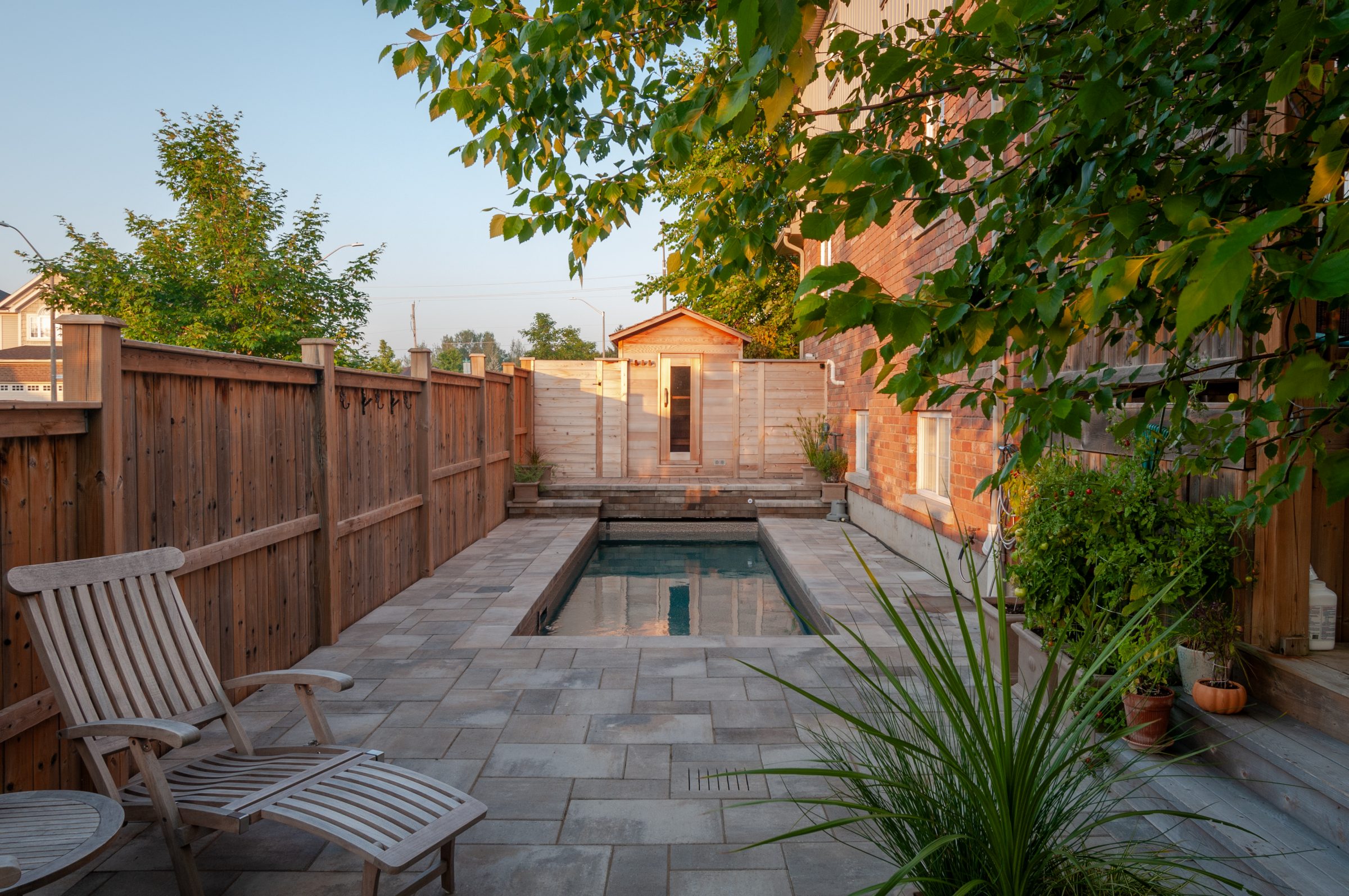
If you are pricing interlocking pavers for a new driveway or patio in Wellington County, or you are dealing with a sloped backyard in desperate need of a structural retaining wall, you are in the right place.
Hardscaping in this region requires a different approach than the idealized projects you typically see online. Properties across our region face distinct environmental pressures—and overlooking these local conditions or cutting corners during installation means a premium interlocking driveway or patio can start to heave and shift within just two years.
At Whispering Pines Landscaping, we have dedicated three decades to bringing high-end landscape construction to this region. Whether you are building a new home or restoring an established estate, this guide walks through what actually matters before you sign a contract. From choosing the right interlocking stones to navigating the local terrain in Fergus, Guelph, or surrounding areas, our goal is to help you protect your investment and enjoy complete peace of mind.
Why Hardscaping Looks Different in Fergus & Guelph
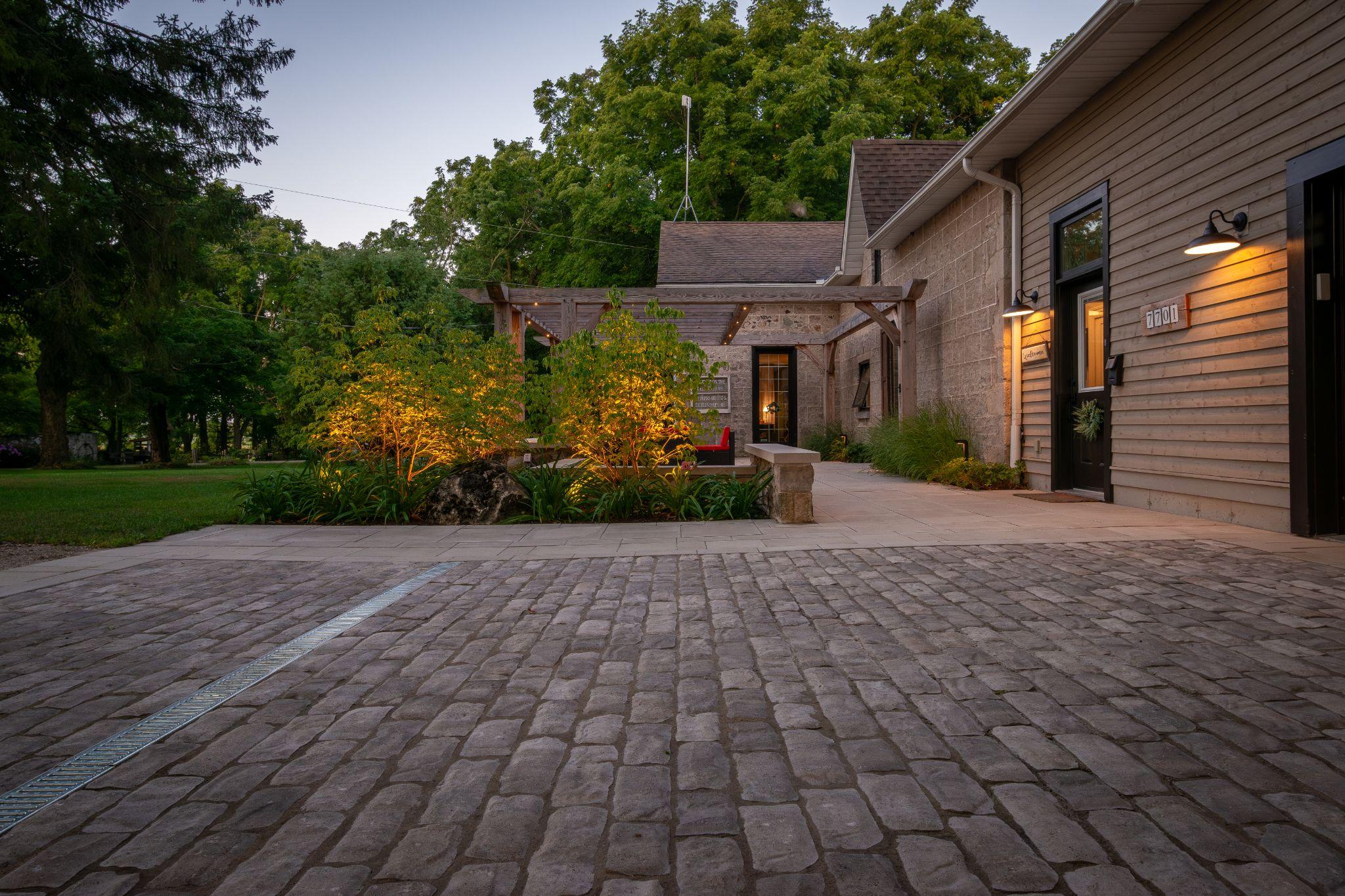
Generic online hardscaping advice rarely accounts for the environmental pressures unique to Wellington County. Properties across Fergus, Guelph, and the surrounding townships face a distinct combination of heavy clay soil, dramatic rolling terrain, and an aggressive freeze-thaw cycle. Overlooking these three regional realities—or cutting corners during installation—means a premium interlocking driveway or structural wall can start to heave, shift, and fail within just two winters. Protecting a hardscaping investment in this region requires shifting away from generic templates and engineering specifically for the local geography.
Navigating the Grand River Valley Terrain
Unlike the gentle backyard tilt found in standard subdivisions, properties across the Grand River Valley feature rolling grade changes and substantial slopes. On this type of terrain, a structural retaining wall is rarely a design preference; it becomes a property necessity to stabilize an eroding hillside or reclaim flat, usable ground for a patio or lawn.
To manage these dramatic grade changes on high-end estates, natural limestone boulder construction is often the most effective approach. Carefully stacking and placing massive stones allows us to stabilize the shifting slope while giving the property a sophisticated, landscaped-by-nature aesthetic rather than a harsh, purely engineered block barrier.
The Clay and Freeze-Thaw Challenge
Wellington County’s heavy clay soil holds water tightly like a basin, meaning subsurface moisture cannot easily drain away. This becomes highly problematic during Ontario’s winter freeze-thaw cycles. When trapped water freezes into ice, it expands and exerts intense upward and outward pressure, displacing the ground. As the ice thaws in the spring, the earth settles unevenly, which causes interlocking driveways to dip, joints to separate, and retaining walls to bow.
None of this is theoretical. We have excavated heavy clay near the Grand River that clings tightly to machinery, and we have managed premium properties where a “flat” survey grade hid a sudden two-foot drop behind the garage. To prevent frost heaving, a professional installation must include a deeper excavation, a compacted clear-stone base, and specialized drainage piping to give water a clear exit path before it can freeze.
Engineering for Longevity
Every quote we write and every layout we design accounts for what a property is actually doing underground and on the slope, not what a standard template assumes about an average yard. Our rigorous site assessments form the foundation of our landscape construction services. The same standard for base depth, subsurface drainage routing, and structural integrity applies whether the final result is a heavy-duty interlocking driveway, a custom patio, or an engineered retaining wall.
Interlocking Pavers, Driveways & Patios: What to Know Before You Start
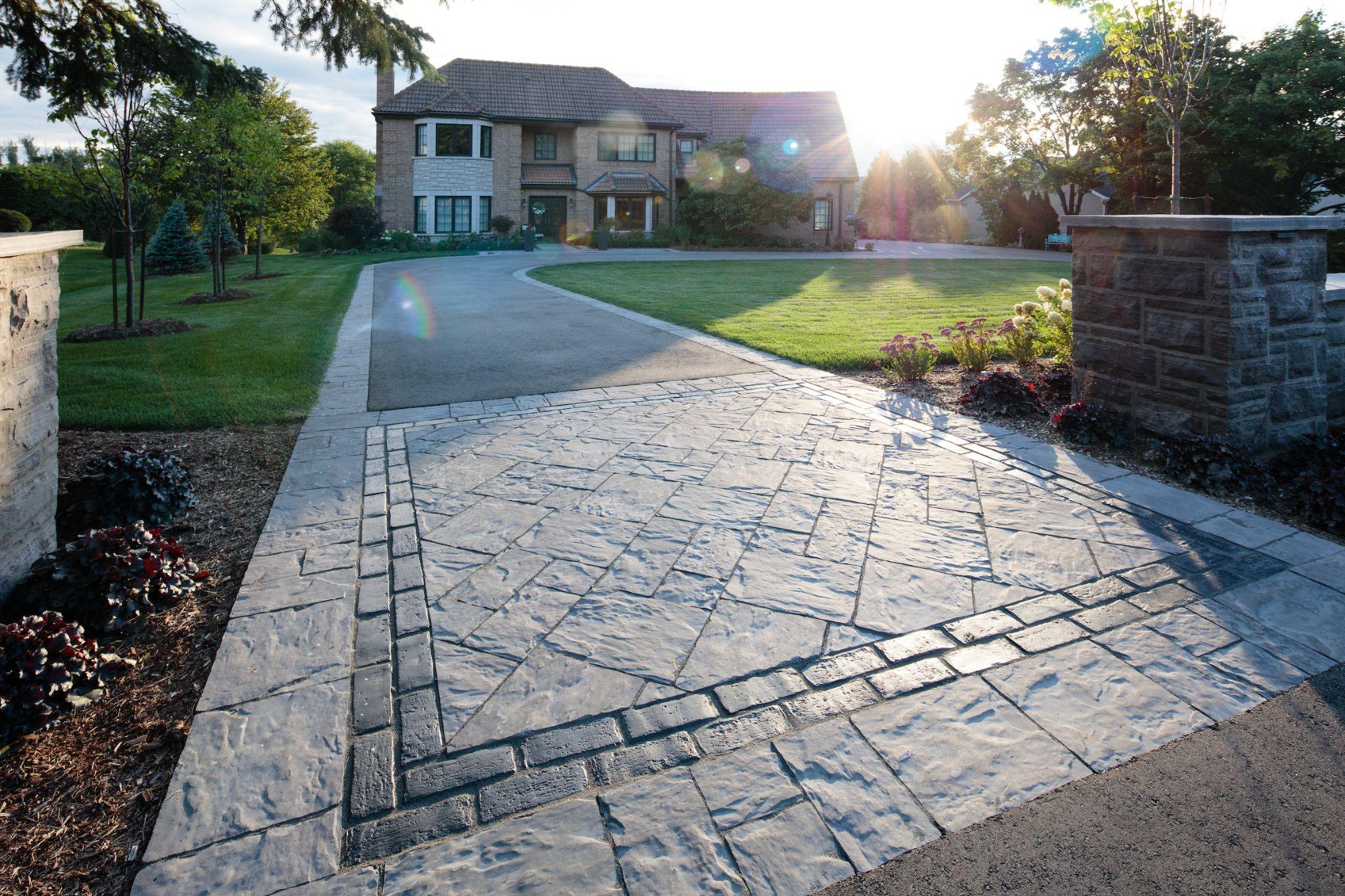
Choosing the right stone depends entirely on how the space will be used and what your property needs.
Choosing the Right Material
Paver options perform differently depending on where they are installed:
- Standard Concrete Pavers: The workhorse for driveways, engineered specifically to handle vehicle weight without cracking.
- Natural Stone: A premium choice for front walkways and patios, offering a custom, textured stonework feel rather than a uniform paved surface.
- Permeable Interlock: A highly practical option if your property struggles with drainage, allowing water to pass directly through the surface rather than pooling on clay-heavy ground.
- Natural Boulder: Used primarily for structural edging, accent work, and framing sloped transitions rather than walking surfaces.
The Foundation: Base Depth and Vehicle Loads
Whatever material you choose, the stone layers underneath determine whether your pavers succeed or fail on Wellington County soil. Because local clay drains poorly, the excavation must be deeper than generic installation charts suggest. It requires a compacted clear-stone base and proper drainage routing to prevent water from sitting beneath the stones and pushing them upward in the spring.
This underground preparation is also where a driveway differs fundamentally from a patio. The weight of parked vehicles demands a significantly deeper gravel base and heavy-duty edge restraints to prevent shifting under tire movements, whereas a patio is built primarily for foot traffic.
Layout, ColoUr, and Pattern Considerations
Aesthetic decisions are best finalized early, as they affect both structural strength and project costs. For instance, a herringbone pattern distributes weight evenly and holds up better under turning tires than a simple running-bond layout—making it ideal for driveways.
Colour choices also carry practical implications. Lighter tones hide winter salt residue and dust well but can look washed out against a red-brick house. Conversely, darker blends mask dirt effectively but absorb significantly more heat during the summer months.
None of this is make-or-break, but deciding on these details before the base goes in typically results in a smoother installation.
Ready to plan your interlocking or retaining wall project in Fergus or Guelph? Request a consultation and get a clear, itemized quote from the crew that will build it.
Retaining Walls for Sloped Fergus & Guelph Properties
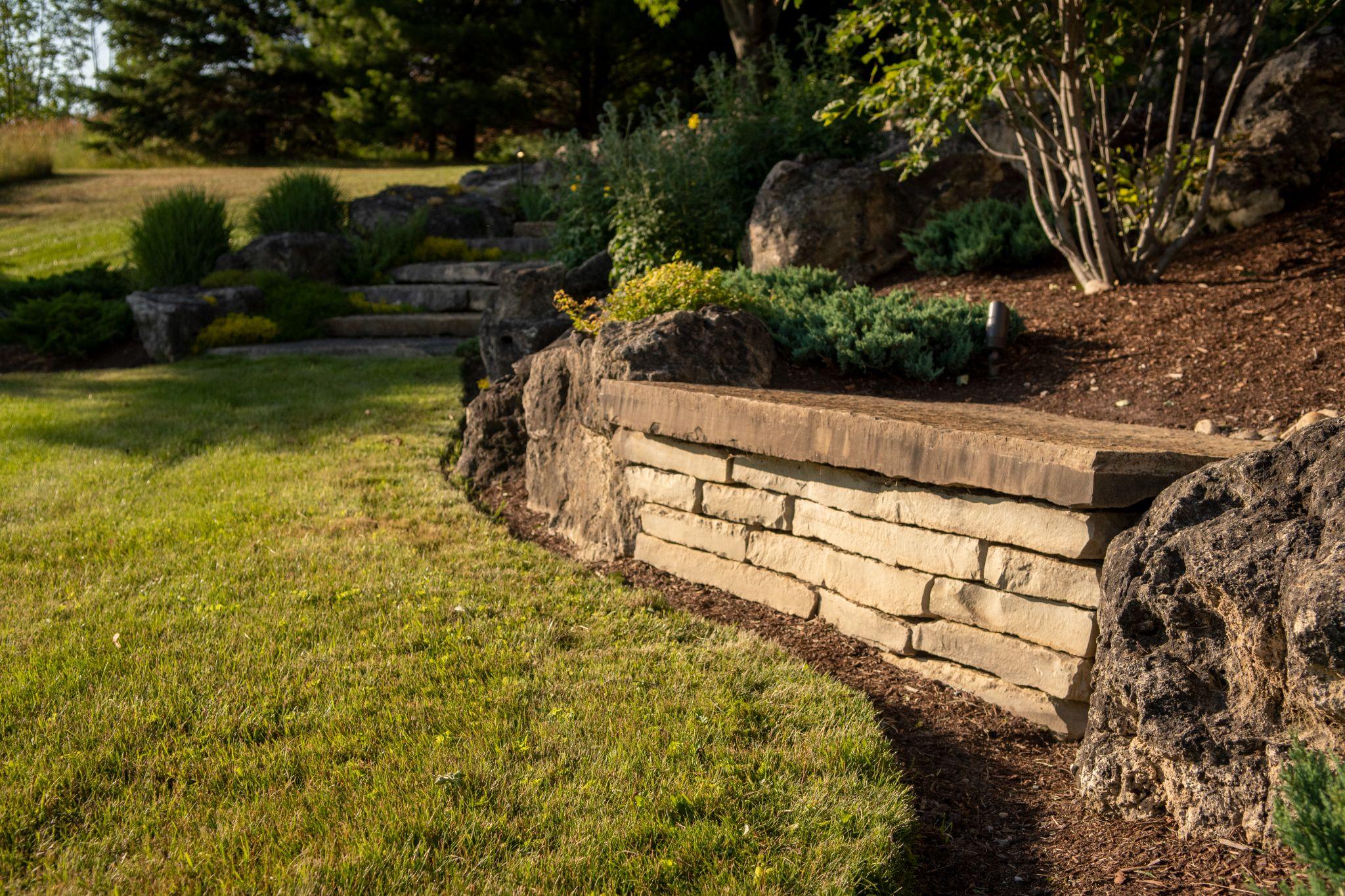
Not every backyard needs a retaining wall, but the substantial grade changes across the Grand River Valley and Elora often demand one. If you are losing usable yard to erosion, water is pooling against your foundation, or an interlocking patio sits at the base of a shifting slope, landscaping alone won’t solve the problem. You have crossed into structural territory.
Height Limits and Permit Requirements
Wall height carries engineering and legal implications that often catch homeowners off guard. A low garden wall is a straightforward project, but a taller structure holding back a driveway or a walkout basement slope typically triggers municipal permit requirements. The Township of Centre Wellington’s building permit requirements and the City of Guelph’s building permit office spell out when a wall crosses into permit territory, and obtaining this information can save you from a costly stop-work order mid-project.
Material Choices and Critical Drainage
When it comes to construction, segmental interlocking block systems are the standard because they are engineered for safe stacking and freeze-thaw durability. Natural stone takes more skill and investment to build correctly, but it perfectly suits older Fergus properties where modern blocks might clash. Regardless of the material, the drainage behind the wall is what matters most. A beautiful wall with no built-in exit path for trapped water is a wall that is already on a timeline to fail.
What Interlocking & Retaining Wall Projects Cost in Fergus & Guelph
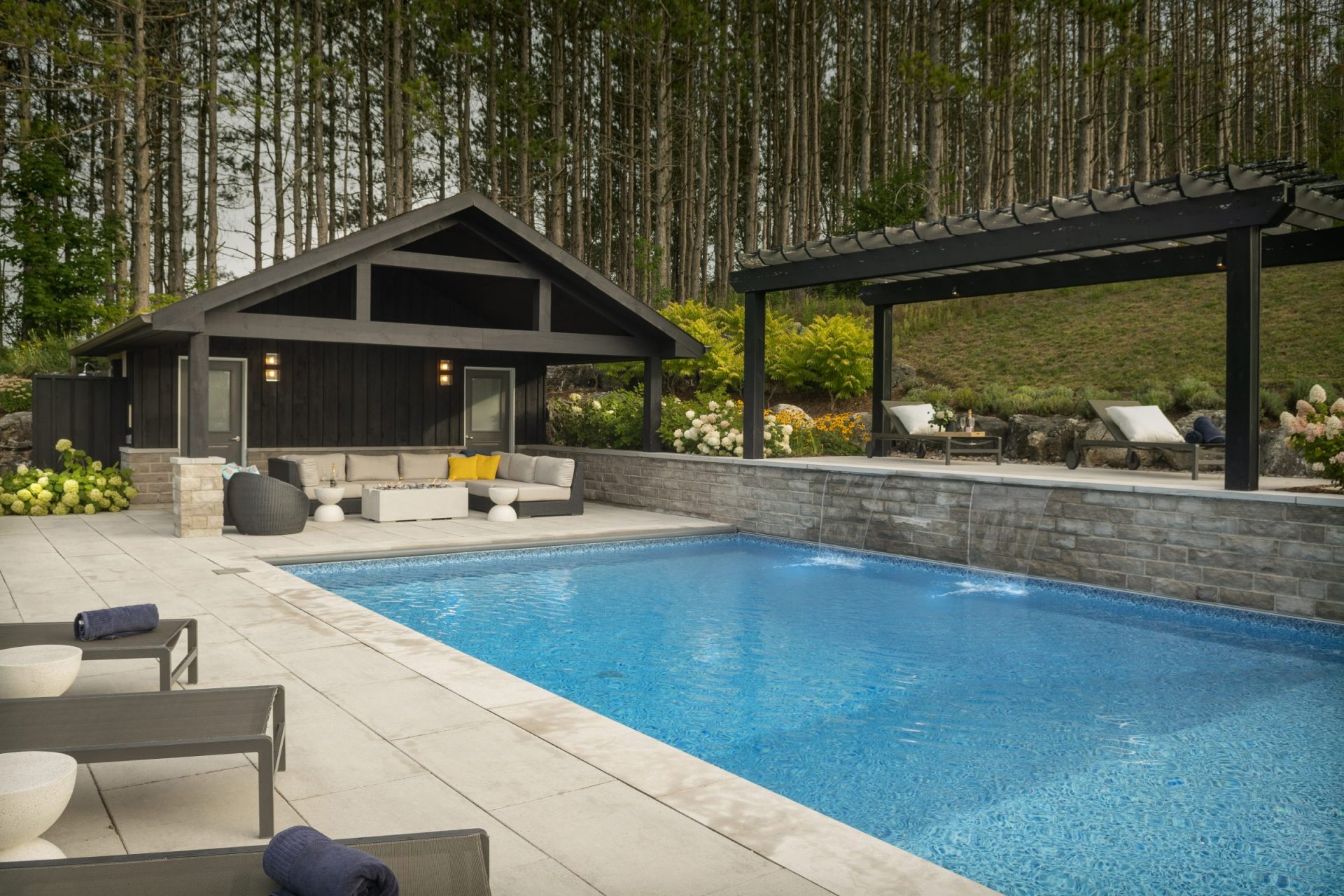
Cost is understandably the first question most homeowners ask, but it is also the hardest to answer in general terms because high-end landscape construction depends heavily on your property’s specific conditions. In Wellington County, a few regional factors reliably dictate your final investment: the volume of heavy clay requiring excavation, the amount of structural grading needed on a sloped property, and your proximity to local supplier yards—as material delivery fees add up quickly on rural estates.
Key Budget Drivers: Access and Site Prep
Property access: A backyard accessible by a skid steer costs significantly less to excavate than a tight space requiring manual labor.
Site preparation: Choosing to renovate or replace a retaining wall rather than building a brand-new feature introduces demolition and disposal fees. Tearing out an old, crumbling driveway or a failing timber wall requires heavy labor and hauling costs that homeowners often overlook when budgeting from online inspiration photos.
Estimated Investment Ranges
While every property requires an on-site assessment to guarantee an exact figure, these baseline ranges reflect 2026 local realities:
- Interlocking Driveway: $50 to $65 per square foot for heavy-duty, vehicle-rated pavers
- Interlocking Patio: $40 to $50 per square foot for premium patio stones
- Precast Retaining Walls: $90 to $130 per face square foot for engineered block systems
- Dry-Stack Stone Retaining Walls: $150 to $200 per face square foot for custom natural stone
- Limestone Boulder Retaining Walls: $150 to $175 per linear foot (assuming 2′ to 2.5′ boulders)
- Armour Stone Retaining Walls: $175 to $225 per linear foot (using premium 2′ heavy blocks)
Quoting a new retaining wall vs. renovating an existing wall is uniquely challenging due to material variability. A natural limestone boulder layout handles a slope very differently—and at a different price point—than a precast wall face.
How Timing Impacts Pricing
Spring and early autumn are peak booking windows in our region, which means both pricing and availability tighten up. Committing to your project early in the season, or scheduling a late-autumn installation window, often gets you more attention from a crew and, occasionally, a better rate than trying to squeeze in during peak months.
Choosing a Hardscaping Contractor in Fergus or Guelph
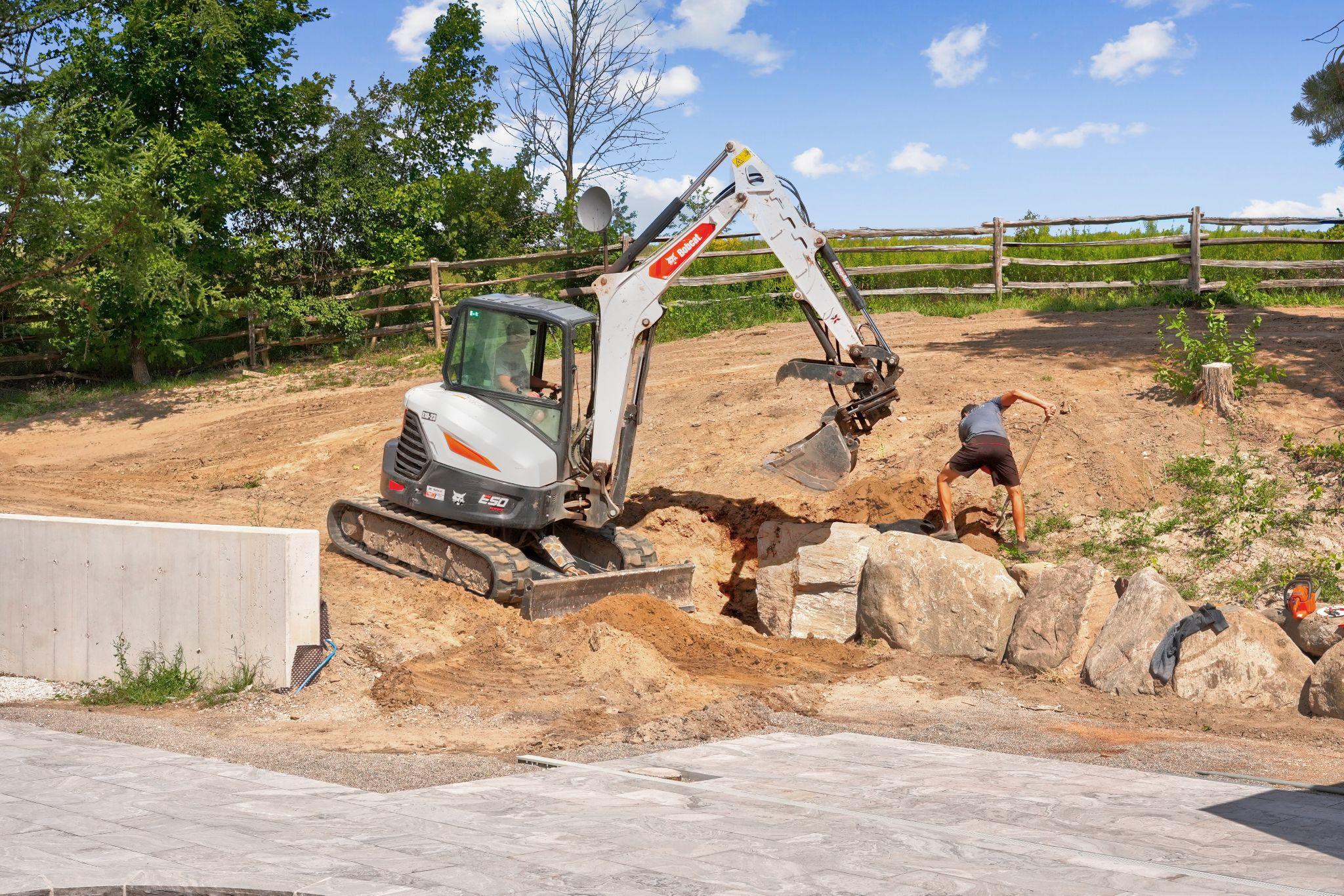
The local market includes contractors who present an appealing estimate but then subcontract the actual work to whoever is available that week. The single most important detail to clarify upfront is who will physically be on your property. A contractor who uses a dedicated, in-house crew from the initial excavation to the final walkthrough maintains control over quality and is better equipped to stand behind their craftsmanship.
Transparent Estimates and Pricing
Always review how a quote is structured before signing a contract. A single-line total that lumps excavation, base materials, pavers, and labor together makes it impossible to see where your investment is actually going or to fairly compare quotes. A professional contractor confident in their pricing will break down the costs into clear categories without being asked.
Understanding the Warranty Scope
Warranty terms vary significantly across the industry, and it is important to know exactly what is covered. Ask specifically what’s covered — the base and drainage work, or just the surface materials — and for how long. A crew that warranties their subsurface excavation and preparation for several years offers a completely different level of protection than one that only covers the stone itself.
Verifiable Local Accountability
Active membership in professional organizations signals a long-term commitment to industry standards. Look for contractors involved with Landscape Ontario, or local groups like the Centre Wellington Contractors Association and the Grand Highlands Home Builders’ Association. Contractors who are active in their regional trade communities typically possess a long-term track record you can verify through actual neighbours and local addresses, rather than relying solely on online reviews.
Keeping Your Interlocking or Retaining Wall in Shape Through Wellington County Winters
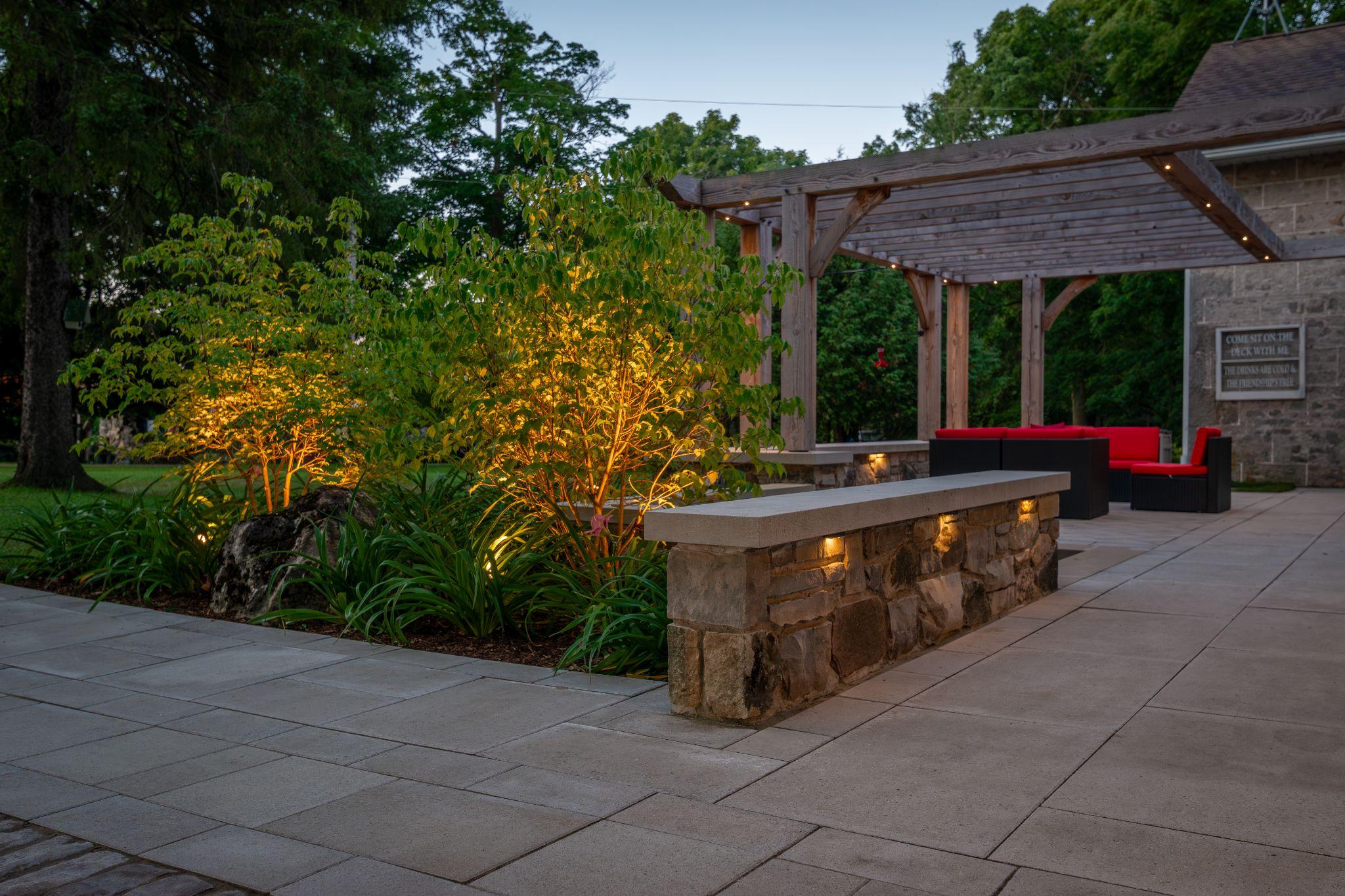
New interlocking pavers look sharp for the first year almost regardless of who installed them. What separates a driveway that still looks exceptional at year eight from one that is heaving and gapping is consistent maintenance of the sealing and joint sand. Because Wellington County’s winter freeze-thaw cycles aggressively exploit any crack or gap, unsealed joints allow water to pool subsurface. When this water freezes, it widens the joints, causing the entire surface to shift a little more each winter until a major repair is required.
Recommended Maintenance Timelines
As a general rule, interlocking surfaces in this region should be checked for resealing every two to three years. A driveway that experiences regular road salt and winter snowplow contact will naturally require attention sooner than a backyard patio tucked away from heavy winter traffic. Waiting until the joint sand is visibly gone or a corner stone has started to lift is often waiting too long; by that stage, you are typically facing a partial re-lay rather than a straightforward reseal.
Defending Against Freeze-Thaw and Salt Damage
The same physical pressures apply to a structural retaining wall. Freeze-thaw pressure behind the wall face is the primary cause of bowing or shifting over time. A wall properly engineered for Wellington County’s conditions requires very little beyond a periodic visual inspection, but identifying small alignment changes early prevents the need for a total structural rebuild.
Homeowners also unintentionally shorten the lifespan of their driveways through incorrect salt application. Calcium chloride products are generally much gentler on concrete pavers than traditional rock salt, which accelerates surface flaking over repeated winters. Shoveling promptly and applying a light, even layer of calcium chloride will safely melt ice without degrading your stone or compromising the integrity of your installation.
Getting Started on Your Fergus or Guelph Hardscaping Project
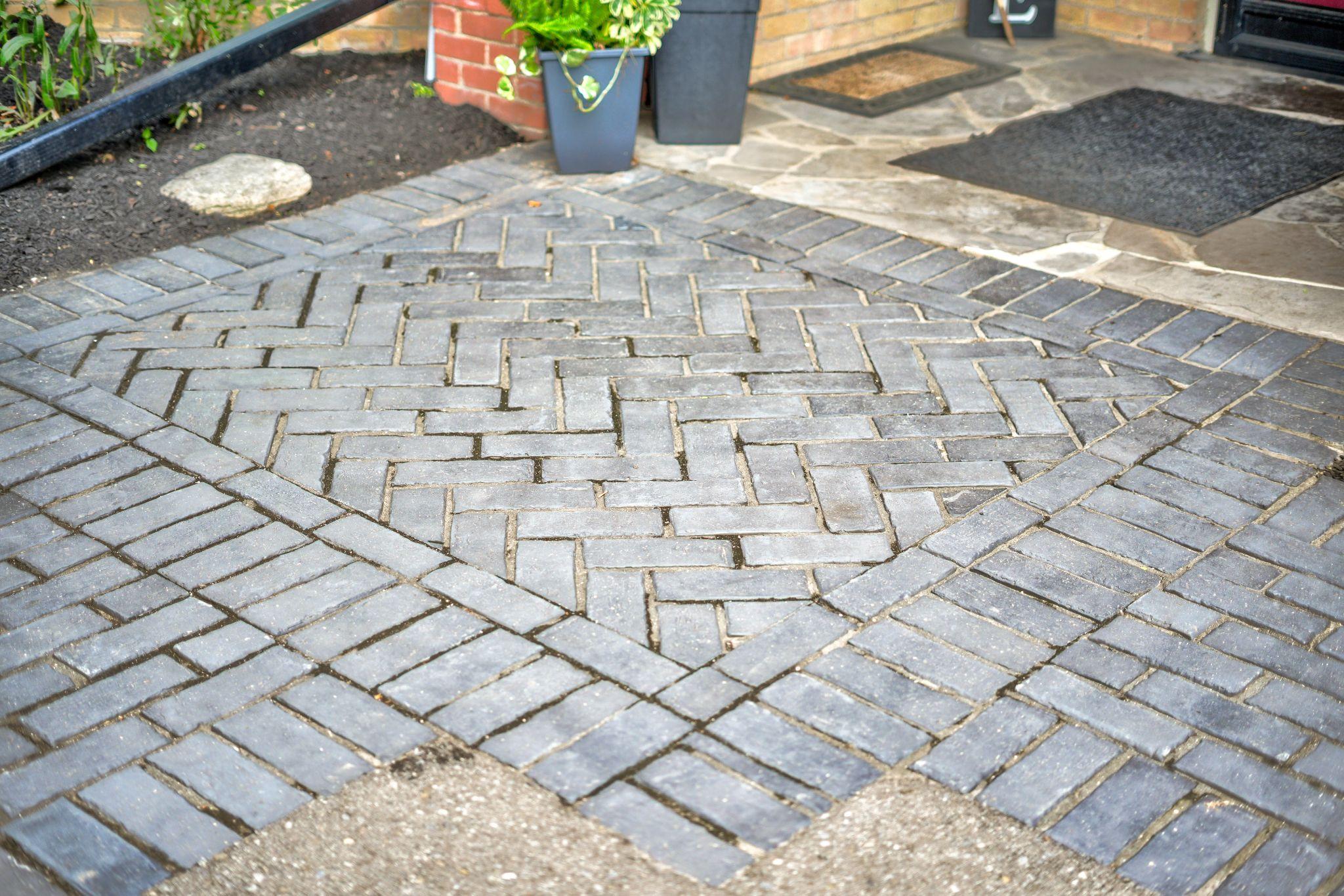
Whether you are at the very beginning—trying to figure out if a shifting slope requires a structural retaining wall or if your driveway needs a complete rebuild—or you are actively ready to compare quotes, the next step is same: get a local expert on-site who understands Wellington County clay and grade transitions. Generic online advice can help you orient your ideas, but every interlocking driveway, patio, and wall must be engineered for the specific conditions of your address, not a generic template.
At Whispering Pines Landscaping, our in-house team manages your entire landscape construction project from start to finish. We never subcontract our work; the dedicated crew that handles the excavation and grading is the same one carefully setting your interlocking pavers or stacking the wall. Homeowners searching for premium landscaping in Guelph, Fergus, and the surrounding areas choose us for this exact combination of on-site consistency and deep local expertise. They want an accountable, regional firm that understands our unique soil conditions, rather than a national franchise relying on revolving subcontractors and generic scripts.
Ready to plan your interlocking or retaining wall project? Request a consultation and get a clear, itemized quote from the crew that will build it.
Summary
Hardscaping across Fergus, Guelph, and the broader Wellington County is defined by three local challenges: heavy clay, rolling slopes, and aggressive freeze-thaw cycles. To ensure your investment withstands these conditions, keep these core principles in mind:
- Base Over Beauty: For an interlocking driveway or patio, subsurface drainage and deep excavation matter far more than the specific interlocking pavers you select. Cheap base work is the leading cause of shifting stones.
- Structural Necessity: Local grade changes turn retaining walls into engineering projects rather than stylistic choices. Always check municipal permit thresholds before building.
- True Cost Drivers: Budgets are dictated by local realities—like clay excavation, grading, and material transport—not generic online estimators.
- In-House Execution: Avoid the risk of subcontracted labor. Look for a team that offers on-site crew consistency from excavation to final cleanup.
- Proactive Maintenance: Routine sealing and joint sand top-ups prevent water from compromising your interlocking stones during winter.
If you are ready to move past generic templates and want a hardscaping solution engineered specifically for your property’s terrain, contact Whispering Pines Landscaping for a transparent, detailed consultation.
Tags: